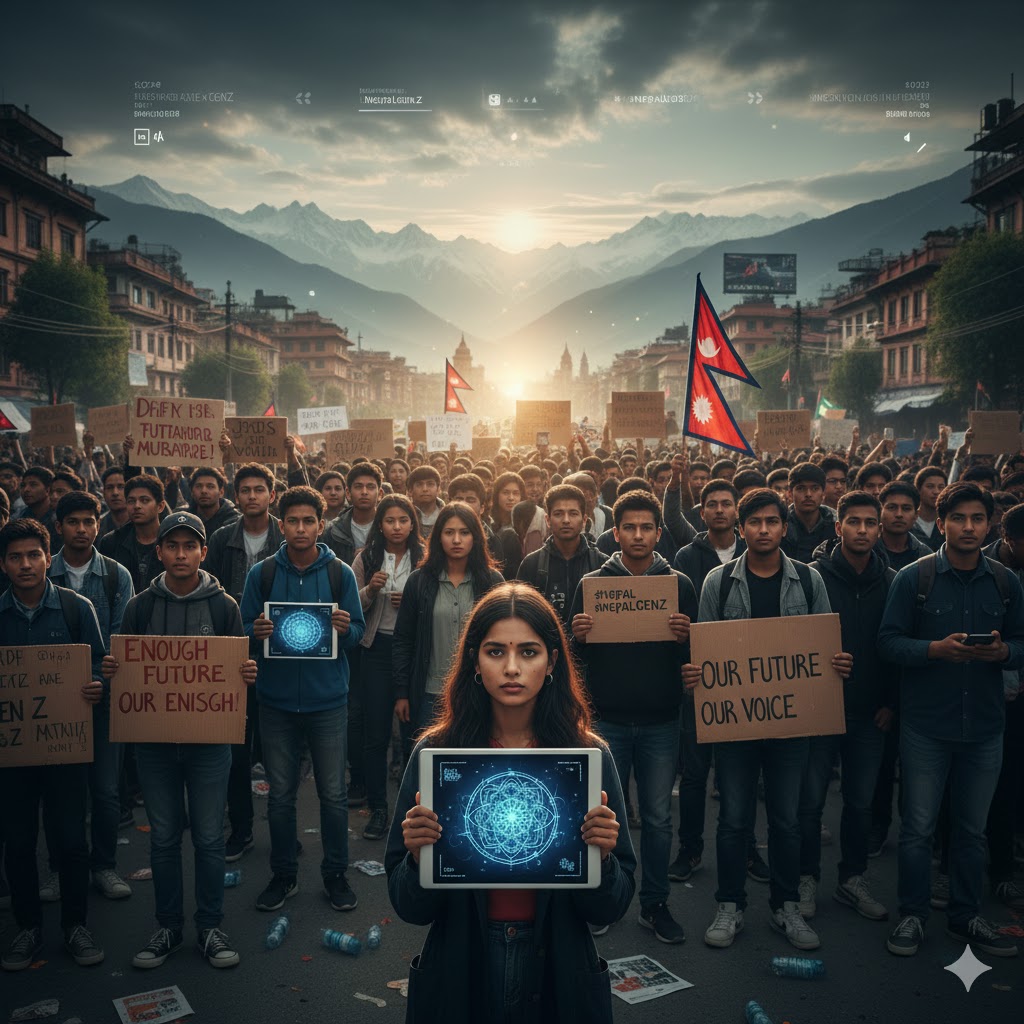
The Roar of a New Generation: Understanding Nepal’s Gen Z Protests
Summary: Nepal’s Gen Z Protests in 60 Seconds
Nepal’s Gen Z Protests were a wave of youth-led demonstrations that erupted in September 2025 — largely sparked by a sudden ban on popular social media platforms and a much deeper anger over corruption, unemployment, and political neglect of young people. What began as students marching in Kathmandu quickly spread across the country and onto the world’s screens, forcing the resignation of a sitting prime minister and reshaping the national conversation about who gets to lead Nepal.
If you want to understand modern youth activism — and how a generation with smartphones, memes, and mounting frustration can move an entire political system — Nepal’s Gen Z Protests are one of the most important case studies of the decade. This guide walks you through what happened, why it matters, how it worked, and how you can learn from it. By the end, you’ll be able to explain the movement to anyone in under two minutes.
Introduction: When a Generation Stops Waiting
Every generation eventually asks the same question: How long do we wait? In Nepal, the answer arrived in September 2025 — and it arrived loudly.
Picture this: a country where the median age sits around the mid-twenties, where roughly one in five young people looking for work cannot find it, and where hundreds of citizens leave every single day to work abroad because staying home feels economically impossible. Then imagine the government telling that same generation that the apps they use to organise, joke, flirt, organise side hustles, and hold power accountable are suddenly illegal.
That combination — economic pain plus political silence plus a spark — is what turned a social media ban into one of the most significant youth uprisings in South Asia in recent memory. When we talk about Nepal’s Gen Z Protests, we’re not just talking about one country or one protest season. We’re talking about a template: the way a digitally native generation converts shared grievance into collective action, with almost no traditional leadership structure and almost total reliance on trust networks.
In this guide, you’ll learn what Nepal’s Gen Z Protests actually were, why they matter far beyond Nepal’s borders, how the mobilisation worked, and — most importantly — how you can study, report on, or learn from them without falling for the misinformation that surrounds them. If you’re a student, journalist, marketer, researcher, policymaker, or simply a curious reader, this piece is built for you. For background on how democratic movements have shaped the region, explore our guide to the history of democracy in South Asia.
Key Takeaways
- Trigger vs. cause: A social media ban was the trigger; youth unemployment, corruption, and political exclusion were the underlying causes of Nepal’s Gen Z Protests.
- Leaderless by design: The movement relied on peer networks, hashtags, and group chats rather than a single charismatic figure or party.
- Speed beats structure: Coordination that once took weeks of meetings now takes hours of group-chat forwarding and short-form video.
- Real consequences: The protests escalated into unprecedented property damage, casualties, and a leadership change that reshuffled Nepal’s political timeline.
- Global signal: Nepal’s Gen Z Protests join a regional pattern of youth-led uprisings across South Asia and East Africa.
- Messy by nature: Youth-led movements are powerful but fragile — they can win a headline and lose an agenda without clear demands.
- Verification is your superpower: Viral clips from these protests were frequently recycled, mislabelled, or AI-generated. Always check before you share.
Table of Contents
- Summary
- Introduction
- Key Takeaways
- What Are Nepal’s Gen Z Protests?
- Why Nepal’s Gen Z Protests Matter
- Benefits: What You Gain From Understanding This Movement
- How It Works: The Anatomy of a Digital Uprising
- Step-by-Step Guide: How to Research Nepal’s Gen Z Protests
- Examples: Moments That Defined the Movement
- Comparison Table: Nepal’s Gen Z Protests vs. Other Youth Movements
- Common Mistakes to Avoid
- Expert Tips
- Best Practices for Writing & Reporting on Nepal’s Gen Z Protests
- Recommended Tools
- Troubleshooting
- FAQs About Nepal’s Gen Z Protests
- Conclusion
- Call to Action
What Are Nepal’s Gen Z Protests?
Nepal’s Gen Z Protests were a series of mass demonstrations, beginning in early September 2025, led predominantly by people born roughly between 1997 and 2012 — the cohort we call Gen Z. They started in Kathmandu and spread to Pokhara, Butwal, Biratnagar, Nepalgunj, Dharan, and dozens of smaller towns.
The immediate spark was a government decision to block access to a long list of social media platforms, framed officially as a move to enforce registration and reduce “anarchy” online. For a generation that lives, works, studies, and organises digitally, the ban felt less like regulation and more like a gag.
The Three Layers of the Movement
- Layer 1 — The Spark: The social media ban, announced with little consultation and enforced abruptly.
- Layer 2 — The Grievance: Youth unemployment, stalled recruitment in the public sector, mass out-migration, and the sense that political parties were trading power among themselves.
- Layer 3 — The Identity: A generation that rejects dynastic politics, “nepo-baby” culture, and the idea that young people should wait their turn.
Crucially, Nepal’s Gen Z Protests were not organised by a political party. They were organised by students, graduates, first-time voters, gig workers, and returning migrants — often through Instagram stories, TikTok videos, Discord servers, and WhatsApp groups. If you want to understand how that kind of decentralised organising works, read our breakdown of digital activism for beginners.
Why Nepal’s Gen Z Protests Matter
You might be reading this from Manila, Nairobi, São Paulo, or Manchester. So why should Nepal’s Gen Z Protests be on your radar?
- They proved digital organising can topple a government. A movement with no central office and no party funding forced a prime minister to step down within days.
- They exposed the economics behind youth anger. Nepal’s reliance on remittances and labour migration is not unique — it’s a preview of what many economies face.
- They reshaped the political calendar. The upheaval triggered an interim administration and pushed national elections onto a new timeline.
- They raised the stakes on misinformation. Recycled footage and AI-generated visuals flooded feeds worldwide, showing how easily a real movement can be hijacked by fakes.
- They gave other generations a vocabulary. Terms like “nepo babies,” “system change,” and “we are not waiting” travelled far beyond Nepal.
In short, Nepal’s Gen Z Protests are a stress test for how modern societies handle a generation that has nothing to lose and a phone in every hand. For a deeper look at how youth movements echo across borders, see youth movements across South Asia.
Benefits: What You Gain From Understanding This Movement
Studying Nepal’s Gen Z Protests isn’t just academic. It gives you practical advantages, whether you’re a writer, a founder, a student, or a citizen.
- Sharper media literacy: You learn to spot recycled footage, fake screenshots, and emotion-driven manipulation.
- Better audience insight: If you market to young people, you’ll understand what makes them trust — or reject — institutions.
- Stronger civic confidence: You see that collective action can be real, not theoretical.
- Improved research skills: You practise sourcing from primary documents, local journalists, and official statements.
- Better story angles: You learn to write about protests with empathy, accuracy, and context instead of sensationalism.
- Career relevance: Youth-led change is now a mainstream topic in policy, tech, HR, and journalism.
Want to turn those skills into a workflow? Our civic engagement toolkit walks you through it step by step.
How It Works: The Anatomy of a Digital Uprising
So how did Nepal’s Gen Z Protests actually function without a leader, a headquarters, or a formal manifesto? Here’s the mechanism, layer by layer.
1. The Ignition Phase
A policy decision lands. Within hours, reaction videos, memes, and screenshots circulate. Each share is a tiny act of recruitment. The algorithm rewards emotion, and outrage is the most shareable emotion of all.
2. The Framing Phase
The conversation shifts from “this ban is annoying” to “this system is broken.” Hashtags become tents under which different grievances gather: jobs, corruption, migration, dynastic politics.
3. The Coordination Phase
Group chats and broadcast channels set times and gathering points. Because there’s no single organiser to arrest or negotiate with, the movement is resilient — and also hard to control.
4. The Escalation Phase
Crowds grow, security forces respond, and the story jumps to global headlines. This is the most dangerous phase: the risk of casualties, property damage, and narrative collapse rises sharply.
5. The Aftermath Phase
Political concessions, resignations, curfews, interim arrangements, and — critically — the question of who converts momentum into policy. Most movements lose energy here.
The core insight: Nepal’s Gen Z Protests didn’t win because they were organised. They won because they were unignorable.
Step-by-Step Guide: How to Research Nepal’s Gen Z Protests
Whether you’re writing an article, preparing a class presentation, or building a case study, follow these steps to get it right.
- Build a timeline first. Write down every dated event you can verify — the ban, the first march, the escalation, the resignation, the interim arrangement, the election announcement. A timeline prevents you from confusing cause and effect.
- Separate trigger from cause. Note what started the fire (the ban) and what fuelled it (unemployment, corruption, exclusion). Both belong in your piece.
- Collect primary sources. Government notices, official statements, court orders, and verified footage from local journalists are gold. Screenshots from anonymous accounts are not.
- Include the numbers — carefully. Use ranges and attribute them. If casualty figures differ between sources, say so. Our guide to fact-checking viral videos shows you how.
- Talk to locals. One conversation with a Kathmandu student beats ten anonymous threads. Seek voices beyond the capital too.
- Map the digital trail. Track how hashtags evolved, which platforms mattered, and how the story jumped from Nepali to global feeds.
- Explain the economics. Remittances, labour migration, and youth joblessness are the engine room. Skip them, and your analysis is hollow.
- Analyse the outcome honestly. Distinguish between concessions, symbolism, and actual institutional change.
- Add the human layer. Protests are not spreadsheets. Describe the fear, the humour, the exhaustion, and the hope.
- Publish responsibly. Avoid instructions that could endanger people, and avoid amplifying unverified claims. See our responsible reporting checklist.
Examples: Moments That Defined Nepal’s Gen Z Protests
Abstract analysis only goes so far. Here are the kinds of scenes and dynamics that made Nepal’s Gen Z Protests distinctive — the examples you should reference when explaining the movement.
Example 1: The Meme That Mobilised
Before the first big march, satirical videos mocking political privilege circulated widely. Humour lowered the psychological barrier to participation: sharing a funny clip felt low-risk, but it put thousands of people on the same page within days.
Example 2: The Scroll That Became a March
Students in Kathmandu reported learning about gathering points through Instagram stories rather than party networks. The distance between “seeing” and “showing up” collapsed to a single tap.
Example 3: The Diaspora Amplifier
Nepalis working in the Gulf, Malaysia, Australia, and Europe turned their own feeds into megaphones — translating, fact-checking, and pressuring international media to pay attention. This is diaspora power in action, and it’s a case study we explore in how diaspora communities shape politics.
Example 4: The Symbolic Takedown
The targeting of party offices and government buildings became the movement’s most controversial chapter. It illustrated a hard truth: when institutions lose legitimacy, symbols of those institutions become targets — and that can cost a movement public sympathy.
Example 5: The Digital Blackout
When platforms went down, organisers pivoted to VPNs, SMS, and offline networks. The lesson: any movement built on one channel is fragile. Always ask, “What’s plan B?”
Comparison Table: Nepal’s Gen Z Protests vs. Other Youth Movements
Placing Nepal’s Gen Z Protests beside other youth-led movements helps you see patterns rather than one-off events.
| Movement | Primary Trigger | Core Organising Tool | Dominant Demographic | Headline Outcome |
|---|---|---|---|---|
| Nepal’s Gen Z Protests (2025) | Social media ban + corruption grievances | Short-form video, group chats, hashtags | Students & first-time voters | Leadership change, interim government, new election timeline |
| Sri Lanka protests (2022) | Economic collapse & shortages | Occupations, hashtags, diaspora pressure | Mixed urban population | Presidential exit, political reset |
| Bangladesh student movement (2024) | Controversial quota system | Student unions + social platforms | University students | Government transition |
| Kenya Gen Z protests (2024) | Tax hike proposals | Live streams, X Spaces, TikTok | Young urban professionals | Policy reversal, renewed civic debate |
| Nepal’s 2006 democracy movement | Authoritarian royal rule | Party networks, street mobilisation | Party cadres & citizens | End of monarchy era |
Notice the shift: the tool changed from party machinery to personal feeds, and the demographic shifted from card-carrying members to anyone with a phone. That’s the defining difference in Nepal’s Gen Z Protests.
Common Mistakes to Avoid When Covering Nepal’s Gen Z Protests
- Mistake 1: Calling it “just a social media ban reaction.” That reduces a decade of frustration to a single policy. Build context first.
- Mistake 2: Assuming there was one leader. Decentralised movements rarely have figureheads, and searching for one distorts the story.
- Mistake 3: Sharing unverified footage. Old clips from other countries were mislabelled as Nepal. Always reverse-search.
- Mistake 4: Romanticising violence. Damage to buildings and loss of life are not “cool” — they’re consequences.
- Mistake 5: Ignoring geography. Kathmandu is not Nepal. Reporting only from the capital misses how the movement spread.
- Mistake 6: Treating “Gen Z” as one voice. Ethnicity, caste, gender, region, and class shaped different experiences.
- Mistake 7: Skipping the economics. Migration, remittances, and joblessness are the backbone of the story.
- Mistake 8: Assuming the ending. Momentum is not the same as institutional change. Report the aftermath too.
- Mistake 9: Using clickbait headlines. Sensational framing destroys trust faster than any algorithm change.
- Mistake 10: Failing to update. Fast-moving stories need timestamps and revisions — see our guide to updating old blog posts.
Expert Tips for Understanding Nepal’s Gen Z Protests
- Start with people, not hashtags. A hashtag tells you what trended; a person tells you why they marched.
- Use three-source verification for every statistic: one official, one journalistic, one on-the-ground.
- Quote ranges, not absolutes. Say “at least 50, with figures varying by source” rather than a single hard number you can’t defend.
- Translate the local slang. Gen Z vocabulary, memes, and in-jokes carry meaning your global audience will miss.
- Add an accessibility pass. Alt text, readable headings, and clean structure help both readers and search engines.
- Watch the language of legitimacy. Notice how officials frame protesters — “students,” “hooligans,” or “citizens.” That framing shapes public sympathy.
- Track policy, not just drama. The most important aftermath of Nepal’s Gen Z Protests is what changed in law and institutions.
- Respect safety. Never publish details that could identify vulnerable activists without consent.
Best Practices for Writing About Nepal’s Gen Z Protests
- Demonstrate E-E-A-T. Show experience, expertise, authoritativeness, and trustworthiness through sourcing, author bios, and transparency.
- Use descriptive headings. Put your keyword in H1 and key H2s naturally — don’t stuff it.
- Add schema markup. FAQ and Article schema help AI systems and search engines understand your content.
- Include an FAQ section. It captures long-tail searches and feeds answer engines directly.
- Link internally with intent. Every internal link should help the reader go deeper, exactly as this post does.
- Cite primary sources. Link to official documents and credible outlets, not just other blogs.
- Write in second person. Speak to “you” to keep readers engaged and reduce bounce rate.
- Timestamp your content. Add a “last updated” date for fast-moving news topics.
- Optimise images. Compress files, use descriptive file names, and write meaningful alt text.
- Refresh quarterly. Follow the workflow in our evergreen content strategy.
Recommended Tools for Researching and Publishing
You don’t need a newsroom budget to report on Nepal’s Gen Z Protests accurately. These tools will get you most of the way.
Verification & Fact-Checking
- Reverse image search: Google Lens and TinEye to trace where a photo really came from.
- Video verification: InVID / WeVerify plugins for keyframe and metadata analysis.
- Fact-check archives: Regional and international fact-checking networks that log viral claims.
Research & Data
- Labour and employment data: Official national surveys and international labour databases for youth unemployment figures.
- Migration and remittance data: Central bank and multilateral reports on remittance share of GDP.
- Google Trends: To see exactly when search interest in Nepal’s Gen Z Protests spiked and where.
Publishing & SEO
- Keyword research: Google Keyword Planner, Ahrefs, Semrush, or AnswerThePublic for long-tail questions.
- Structured data testing: Google’s Rich Results Test for your FAQ schema.
- Content optimisation: Surfer or Clearscope to benchmark topical coverage.
- Distribution: A newsletter platform plus a social scheduler to reach audiences beyond search.
For a deeper breakdown of our publishing stack, visit our content research stack.
Troubleshooting: When Your Research or Content Goes Wrong
Problem: You can’t verify a viral claim
Fix: Don’t publish it. Instead, publish the fact that it’s unverified and explain how you checked. Transparency builds trust — see misinformation-proof your writing.
Problem: Sources contradict each other
Fix: Present the range, name the sources, and explain why they differ (timing, access, political framing). Contradiction is information, not failure.
Problem: Your post ranks for the wrong intent
Fix: Check the search results page for your main keyword. If results are news-heavy, add a “latest developments” section. If they’re explainer-style, lean into definitions and FAQs.
Problem: AI answers ignore your article
Fix: Add clear definitions, structured FAQs, direct answers in the first sentence of each section, and FAQ schema. Our guide to ranking in AI search explains the details.
Problem: Engagement drops after the intro
Fix: Shorten paragraphs, add subheadings every 150–200 words, and use bullet points. Readers skim before they read.
Problem: You’re emotionally burned out
Fix: Covering suffering is heavy. Step away, schedule breaks, and talk to colleagues. Sustainable reporting is better reporting.
FAQs About Nepal’s Gen Z Protests
1. What were Nepal’s Gen Z Protests?
Nepal’s Gen Z Protests were mass youth-led demonstrations in September 2025 triggered by a social media ban and fuelled by long-standing anger over corruption, unemployment, and political exclusion of young people.
2. When did Nepal’s Gen Z Protests start?
They began in early September 2025, escalating within days from peaceful marches in Kathmandu into nationwide demonstrations.
3. What triggered Nepal’s Gen Z Protests?
The immediate trigger was the government’s decision to block access to dozens of social media platforms. The deeper causes were youth unemployment, mass labour migration, and frustration with dynastic politics.
4. Who led Nepal’s Gen Z Protests?
There was no single leader. The movement was decentralised, coordinated through social platforms, group chats, and student networks rather than a political party or figurehead.
5. Why is it called a “Gen Z” protest?
Because the participants were overwhelmingly young people — students, recent graduates, and first-time voters born roughly between 1997 and 2012 — and the organising methods were native to that generation.
6. What did Nepal’s Gen Z Protests achieve?
The protests led to the resignation of the prime minister, the formation of an interim administration under a new leader, and a revised national election timeline. They also shifted public debate toward youth employment and anti-corruption reform.
7. How many people died in Nepal’s Gen Z Protests?
Reported figures vary between sources. Independent tallies placed the death toll at several dozen at minimum, with hundreds more injured. Always cite the range and the source when you mention casualties.
8. Was social media the only reason for the protests?
No. The ban was the spark, not the fuel. Economic stagnation, migration pressure, and a perception of unaccountable leadership were the underlying drivers.
9. How did the protests spread so quickly?
Short-form video, group chats, and memes lowered the cost of participation. A single share could recruit a stranger, and no central committee was needed to set a date or location.
10. Are Nepal’s Gen Z Protests still relevant in 2026?
Absolutely. Their political consequences — interim governance, electoral reform debates, and youth political engagement — continue to shape Nepal’s direction well beyond the protests themselves.
11. What can other countries learn from Nepal’s Gen Z Protests?
Three lessons stand out: digital networks are powerful but fragile; movements need demands, not just energy; and ignoring a young generation’s economic reality is politically expensive.
12. How can I write about Nepal’s Gen Z Protests responsibly?
Verify every clip, attribute every statistic, include local voices, avoid sensationalism, and update your article as facts evolve. Start with our responsible reporting checklist.
13. How can students study Nepal’s Gen Z Protests academically?
Build a verified timeline, compare it with other youth movements, analyse the digital organising methods, and evaluate the policy outcomes. Our civic engagement toolkit offers a ready-made framework.
14. Do Nepal’s Gen Z Protests mean political parties are finished?
Not finished — challenged. Parties still control institutions and elections. What’s changed is that young voters now expect responsiveness, and they have the tools to punish silence.
15. Will the scheduled elections resolve the tensions behind the protests?
Elections can reset legitimacy, but they don’t automatically create jobs or end corruption. Whether the energy of Nepal’s Gen Z Protests translates into durable reform depends on what happens after the ballots are counted.
Conclusion: The Roar Doesn’t Stop at the Border
Nepal’s Gen Z Protests are a story about patience running out — and about what happens next. A generation told to wait its turn decided that the turn was now. They used the tools they had, in the language they spoke, and they changed the political weather of an entire country in a matter of days.
But the roar is not just Nepal’s. It echoes across South Asia, East Africa, and beyond, wherever young people find that their education doesn’t lead to work, their votes don’t lead to accountability, and their voices are treated as noise. Understanding Nepal’s Gen Z Protests helps you read the next decade of politics — and it helps you tell that story with accuracy and empathy rather than hype.
So take the lessons: verify before you share, explain the economics before you describe the flames, listen to local voices before you generalise, and always ask what happens after the headlines fade. Do that, and you’ll be one of the few voices your readers actually trust.
Call to Action
Ready to turn this into something real? Here’s how to go further:
- Subscribe to our newsletter for weekly deep dives on youth movements, media literacy, and global politics. Join the newsletter here.
- Download our free timeline template and build your own verified chronology of Nepal’s Gen Z Protests. Get the timeline template.
- Take the next step in your research with our civic engagement toolkit and fact-checking guide.
- Share this article with someone who needs to understand how a generation can move a nation — and drop a comment below with the question you still want answered.
The roar of a new generation is loud. Make sure your understanding is louder than the noise.