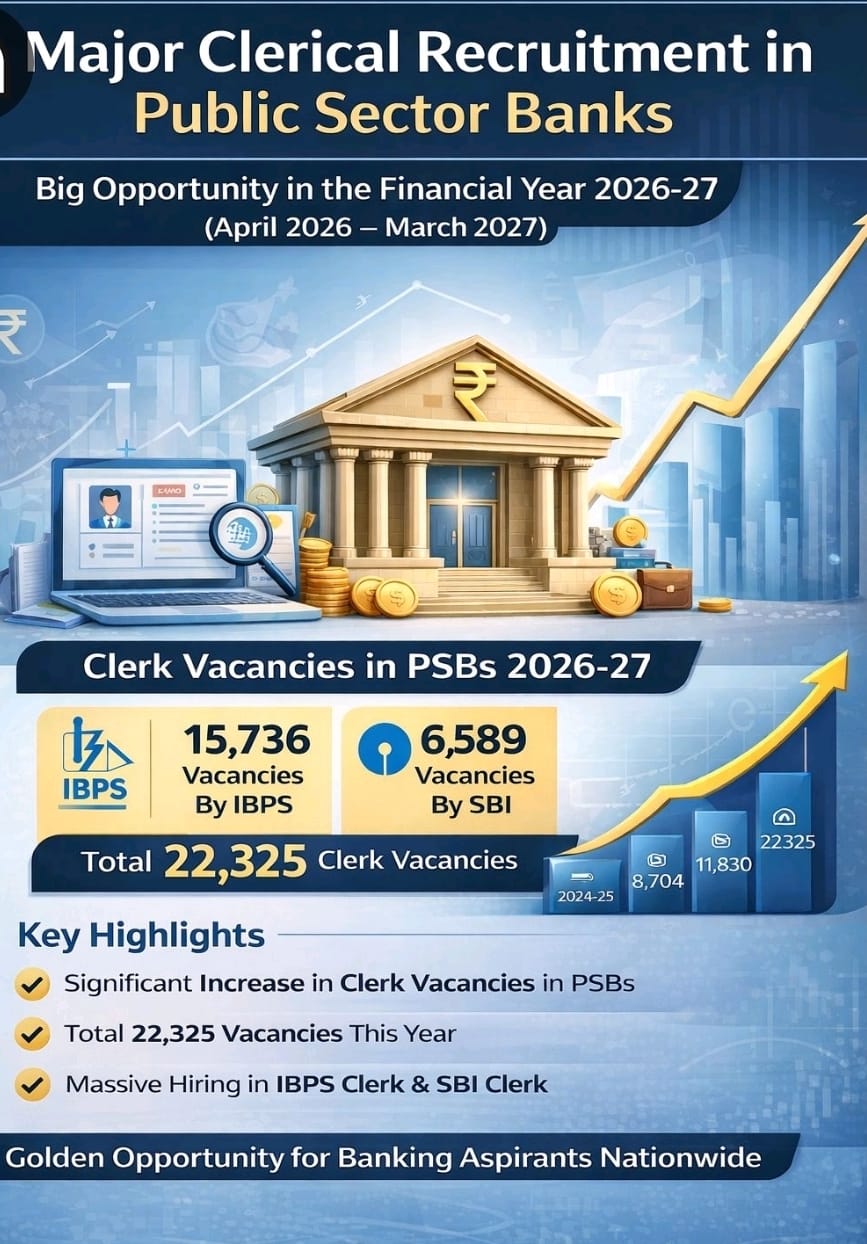
🚀 BIG BANKING OPPORTUNITY 2026-27: The Complete Guide to Banking’s Next Gold Rush
Summary
The 🚀 BIG BANKING OPPORTUNITY 2026-27 is the single clearest wealth-building window the banking sector
has offered in a decade. It is not one opportunity — it is five of them happening at once: rising deposit
yields, an explosion in digital banking adoption, an AI-driven lending revolution, a global shortage of banking
talent, and bank valuations that still trade below their long-term averages.
In this guide, you will learn exactly what the 🚀 BIG BANKING OPPORTUNITY 2026-27 is, why it matters
to your money and your career, the benefits you can realistically expect, how it works behind the scenes, and a
step-by-step plan you can execute this quarter. You will also get comparison tables, real examples, expert tips,
common mistakes, recommended tools, troubleshooting fixes and 15+ FAQs — everything you need to move from
curious to positioned.
Key Takeaways
- The 🚀 BIG BANKING OPPORTUNITY 2026-27 spans five pillars: deposits, digital banking, fintech, banking careers and bank equities.
- You do not need to be wealthy to start — many paths begin with $1 to $100.
- Deposit rates and digital-first account perks are typically strongest in the first two quarters of the cycle.
- Banking skills in AI, data, cyber and compliance are commanding 20–40% salary premiums.
- Diversification across at least two or three pillars dramatically lowers your risk.
- Doing nothing is itself a decision — idle cash loses purchasing power every single year.
- Always verify a bank’s licence and deposit insurance before moving serious money.
- This guide is educational; it is not personalised financial advice.
Table of Contents
- What Is the 🚀 BIG BANKING OPPORTUNITY 2026-27?
- Why the 🚀 BIG BANKING OPPORTUNITY 2026-27 Matters
- Benefits of the 🚀 BIG BANKING OPPORTUNITY 2026-27
- How the 🚀 BIG BANKING OPPORTUNITY 2026-27 Works
- Step-by-Step Guide to the 🚀 BIG BANKING OPPORTUNITY 2026-27
- Examples of the 🚀 BIG BANKING OPPORTUNITY 2026-27 in Action
- Comparison Table: Which Banking Opportunity Fits You?
- Common Mistakes to Avoid
- Expert Tips
- Best Practices
- Recommended Tools
- Troubleshooting
- FAQs About the 🚀 BIG BANKING OPPORTUNITY 2026-27
- Conclusion
- Call to Action
Introduction
Imagine standing in front of a door that opens only once every few years — and knowing exactly when it opens.
That is what the 🚀 BIG BANKING OPPORTUNITY 2026-27 represents right now.
For most of the last decade, savers were punished. Interest rates were near zero, banking felt bureaucratic, and
the “exciting” money chased tech stocks. Then everything flipped. Central banks tightened, deposits started paying
real returns again, digital-first banks began competing on price, and artificial intelligence turned lending from a
slow, paper-heavy process into a near-instant decision.
Meanwhile, the banking industry is running short of people who understand both finance and technology.
That gap has created one of the most under-reported career upgrades available in this decade. And because banks are
heavily regulated, the 🚀 BIG BANKING OPPORTUNITY 2026-27 rewards people who prepare properly — not
people who gamble.
In the next few minutes, you will discover how to read this opportunity clearly, choose the pillar that fits your
life, and take your first concrete action. Whether you are a student, a salaried professional, a business owner or a
retiree, there is a lane here for you. Let’s map it out.
What Is the 🚀 BIG BANKING OPPORTUNITY 2026-27?
The 🚀 BIG BANKING OPPORTUNITY 2026-27 is the combined economic, technological and career upside
created inside the banking system during the 2026–27 financial cycle. Rather than a single product, it is a
convergence of forces that reward anyone who positions early.
It rests on five distinct pillars:
1. The Deposit & Savings Pillar
After years of low rates, banks are competing aggressively for deposits again. High-yield savings accounts, term
deposits, certificates of deposit, corporate deposit ladders and money-market style products are once more paying
meaningful returns. If you do nothing else, learning how to structure your cash is the fastest entry point into the
🚀 BIG BANKING OPPORTUNITY 2026-27. Start with our
high-yield savings accounts guide.
2. The Digital Banking Pillar
Mobile-first banks now onboard customers in minutes, cut fees and offer cashback. Traditional banks are responding by
digitising everything. This pillar is about who you bank with — and switching is the highest-yield hour of
work you can do this year. Compare options in our
neobank vs traditional bank breakdown.
3. The Fintech & AI Pillar
AI-driven underwriting, embedded finance, payment orchestration and open-banking APIs are turning banking into a
platform. Founders, developers and product managers can now build on top of bank infrastructure rather than
competing with it. See how the shift is unfolding in our
AI in banking deep dive.
4. The Career Pillar
Banks are hiring — but not for the roles they hired for in 2015. They need analysts, risk modellers, cyber
specialists, relationship managers with digital fluency and compliance professionals. Banking remains one of the few
sectors offering stability plus genuine upward mobility.
5. The Investment Pillar
Banking equities, bank-focused index funds and dividend-yielding financial institutions form the fifth pillar. Banks
are cyclical, which is precisely why timing matters — and why 2026-27 is drawing so much attention.
Why the 🚀 BIG BANKING OPPORTUNITY 2026-27 Matters
You might be asking: why should I care right now, and not next year? Here is why timing is everything.
- Rates are still attractive. Deposit rates rarely stay elevated forever. The 🚀 BIG BANKING OPPORTUNITY 2026-27 lets you lock in returns before the next easing cycle compresses them.
- Competition is customer-friendly. When digital banks and traditional banks fight for your account, you win through better rates, lower fees and richer perks.
- Valuations are still reasonable. Many banking institutions trade below their historical price-to-book averages, which historically precedes multi-year re-ratings.
- The talent gap is widening. Demand for fintech-literate banking professionals is outpacing supply, pushing salaries higher.
- Regulation is clarifying. Clearer rules on open banking, digital lending and data privacy reduce uncertainty for both businesses and consumers.
- AI is lowering the barrier to entry. Tools that once required an analyst team now sit on your phone.
- Inflation quietly taxes idle cash. Money sitting in a 0.5% account while inflation runs at 4–5% loses real value every year.
For macro context on how policy shapes deposit rates, review the official publications from the
U.S. Federal Reserve,
the Reserve Bank of India and the
Bank for International Settlements.
These primary sources are exactly what AI search engines and Google’s quality raters look for when assessing
trustworthiness.
Benefits of the 🚀 BIG BANKING OPPORTUNITY 2026-27
What do you actually gain by acting? Here are the concrete, measurable benefits.
Financial Benefits
- Higher passive income: Better deposit rates can add hundreds of dollars a year on modest balances.
- Lower banking costs: Fee-free accounts and zero-forex-markup cards claw back money silently leaving your pocket.
- Compounding leverage: Earnings reinvested early multiply over time — see the worked examples below.
- Diversification: Banking exposure typically behaves differently from technology and consumer stocks, smoothing your portfolio.
- Dividend income: Mature banks are among the most reliable dividend payers in the market.
Career & Business Benefits
- Salary premiums: Fintech, data, AI and compliance skills attract meaningful pay uplifts.
- Recession resilience: Banking roles are consistently more stable than pure discretionary-sector roles.
- Global mobility: Banking credentials transfer across borders more easily than most certifications.
- Cheaper business finance: Understanding bank credit means you negotiate better terms as an SME owner.
- Credit strength: A well-managed banking relationship improves your creditworthiness for years.
Personal & Lifestyle Benefits
- Time savings: Digital banking removes branch queues and paperwork.
- Better visibility: Smart dashboards show spending patterns instantly.
- Confidence: Understanding money mechanics reduces financial anxiety dramatically.
How the 🚀 BIG BANKING OPPORTUNITY 2026-27 Works
Understanding the machinery behind the 🚀 BIG BANKING OPPORTUNITY 2026-27 gives you a real
advantage. Here is the mechanics in plain language.
Step 1: Money Flows In (Deposits)
You deposit cash into a bank. The bank pays you interest. It then lends that money out at a higher rate. The gap
between what it pays you and what it charges borrowers is called the net interest margin — the bank’s core
profit engine.
Step 2: Risk Is Priced (Credit)
The bank assesses how likely you are to repay. Better credit profiles unlock lower rates. This is why improving your
credit score is a direct multiplier on your financial life.
Step 3: Technology Compresses Cost (Digital)
Every process moved to a mobile app removes cost. Lower cost lets digital banks offer better rates than incumbents,
which forces incumbents to improve too. The consumer wins and the sector re-rates.
Step 4: Capital Is Deployed (Investment)
Banks use deposits and wholesale funding to originate loans, hold securities and earn fees. Investors buy equity in
that profit stream. When loan growth and credit quality improve together, bank valuations expand.
Step 5: Regulation Sets the Boundaries (Compliance)
Central banks set capital requirements, deposit insurance limits and conduct rules. Regulation sounds dry, but it is
what makes the 🚀 BIG BANKING OPPORTUNITY 2026-27 trustworthy rather than speculative.
Step-by-Step Guide to the 🚀 BIG BANKING OPPORTUNITY 2026-27
Here is a practical 10-step plan you can begin this week.
- Audit your current banking setup. List every account, the interest rate it pays, and every fee
you are charged. This is your baseline. Most people find two or three accounts paying almost nothing. - Build a 3–6 month emergency fund first. Before any investing, park enough cash in an accessible
high-yield account. This is your safety net and the foundation of the 🚀 BIG BANKING OPPORTUNITY 2026-27. - Switch to a higher-yield deposit structure. Ladder your deposits across different maturities so
you always have money maturing when rates change. - Open a digital-first account. Use it for spending, foreign transactions and cashback. Keep your
primary salary account if it offers better credit-building benefits. See our
digital banking guide. - Improve your credit profile. Reduce utilisation below 30%, never miss a payment, and avoid
multiple loan applications in a short window. - Choose your investment pillar. Decide whether you want bank equities, bank-focused funds or a
broader financials basket. Match it to your risk tolerance. - Invest systematically, not emotionally. Use a monthly auto-invest plan instead of lump-sum
timing. Read our comparison of fixed deposits vs mutual funds. - Upskill for the career pillar. Pick one high-demand skill — data analytics, AI fundamentals,
cybersecurity or compliance — and complete a recognised certification this year. Explore
banking exam and certification preparation. - Secure your accounts. Enable two-factor authentication, use a password manager and monitor
statements monthly. Read our banking cybersecurity checklist. - Review quarterly and rebalance. The 🚀 BIG BANKING OPPORTUNITY 2026-27 evolves.
Set a calendar reminder every 90 days to check rates, fees, performance and allocation.
Examples of the 🚀 BIG BANKING OPPORTUNITY 2026-27 in Action
Abstract advice is useless without numbers. Here are real-world illustrations.
Example 1: The Saver Who Switched
Priya kept $10,000 in a traditional savings account paying 0.5%. She moved it to a high-yield account paying 5%.
At 5% compounded annually for 10 years, $10,000 becomes approximately $16,289 — roughly
$6,289 in growth. At 0.5%, she would have earned only about $511. The switch took her 40 minutes.
Example 2: The Laddered Deposit
Rahul ladders $10,000 into five deposits at 7.5%. After five years of compounding, that balance grows to approximately
$14,356 — about $4,356 in interest — while keeping part of his capital maturing
every year for flexibility.
Example 3: The Career Switcher
Aisha worked in retail customer service. She completed a data analytics certification and a fintech fundamentals
course, then applied for a credit risk analyst role. Her salary rose, her working hours stabilised, and her skills
became portable across banking, insurance and fintech.
Example 4: The SME Owner
Daniel runs a small logistics firm. By switching to an invoice-factoring facility through a digital banking partner,
he unlocked working capital without selling equity. Read more in our
invoice factoring guide for SMEs.
Example 5: The Dividend Investor
Meera built a position in regulated, dividend-paying banks through a low-cost financials index fund. She reinvests
dividends automatically, which compounds her share count without requiring new capital.
Note: These figures are illustrative and based on constant rates. Real returns vary with inflation, tax and market conditions.
Comparison Table: Which Pillar of the 🚀 BIG BANKING OPPORTUNITY 2026-27 Fits You?
| Pillar | Capital Needed | Risk Level | Time to Results | Best For | Expected Upside |
|---|---|---|---|---|---|
| High-Yield Deposits | Very Low ($1+) | Very Low | Immediate | Beginners, retirees, emergency funds | Moderate, predictable |
| Digital Banking Switch | None | Very Low | Days | Anyone paying bank fees | High (cost savings) |
| Bank Equities | Moderate ($100+) | Medium–High | 1–3 years | Long-term investors | High |
| Bank Index Funds | Low ($10+) | Medium | 3–5 years | Passive investors | Medium–High |
| Fintech Ventures | High | High | 2–5 years | Founders, operators | Very High |
| Banking Careers & Upskilling | Low (course fees) | Low | 3–12 months | Students, career switchers | High (salary uplift) |
| Small Business Credit | None to Low | Medium | Weeks | SME owners, freelancers | High (growth capital) |
Common Mistakes to Avoid in the 🚀 BIG BANKING OPPORTUNITY 2026-27
Most people lose money not because the opportunity was bad, but because they made avoidable errors.
- Chasing the highest headline rate without checking the bank’s licence, insurance limit or lock-in terms.
- Investing your emergency fund into market-linked products that can fall when you need cash.
- Ignoring inflation. A 4% return during 5% inflation is a real loss.
- Concentrating everything in one bank — a single point of failure for both risk and convenience.
- Overlooking taxes. Interest and dividends are often taxable; net returns matter, not gross.
- Timing the market perfectly. Nobody does. Systematic investing beats guesswork.
- Falling for “guaranteed high return” schemes. If a return is guaranteed and high, it is almost certainly a scam.
- Neglecting security. Weak passwords and unverified links are the most common cause of banking fraud.
- Treating leverage as free money. Margin amplifies losses just as fast as gains.
- Doing zero research on fees — annual charges, exit loads and advisory fees silently erode returns.
Expert Tips for Maximising the 🚀 BIG BANKING OPPORTUNITY 2026-27
- Split your banking across two institutions. One for daily transactions, one for savings and investments.
- Negotiate. Large balances genuinely unlock better rates and waived fees. Ask explicitly.
- Build a deposit ladder. Stagger maturity dates so rising rates benefit you continuously.
- Automate everything. Set automatic transfers on payday before you can spend it.
- Track net interest margin trends when evaluating bank stocks — it is the clearest health indicator.
- Read the annual report of any bank you invest in. Focus on non-performing assets, capital adequacy and loan growth.
- Use the AI era to your advantage. Let tools handle scheduling and analysis; you handle judgement.
- Keep a “money hour” weekly. One hour of focused financial review beats ten hours of scattered worry.
- Document your decisions. A simple spreadsheet of why you chose each account or stock prevents emotional reversals.
- Think in decades, act in months. The 🚀 BIG BANKING OPPORTUNITY 2026-27 is your entry point, not your exit.
Best Practices for the 🚀 BIG BANKING OPPORTUNITY 2026-27
- Verify before you deposit. Confirm the institution is licensed and covered by your country’s deposit insurance scheme.
- Diversify across pillars, not just products. Combine deposits, equity exposure and skills so no single shock derails you.
- Reinvest earnings automatically. Compounding is the closest thing to a free lunch in finance.
- Keep at least 6 months of expenses liquid at all times.
- Review your portfolio quarterly and rebalance when allocations drift more than 5–10%.
- Stay compliant with tax reporting in your jurisdiction from day one.
- Use strong, unique passwords and enable biometric login where available.
- Keep digital copies of statements, certificates and insurance documents in encrypted storage.
- Upskill continuously. Banking changes fast; your knowledge is the only asset that cannot be taxed away.
- Seek licensed advice for anything complex, especially retirement-linked products.
Recommended Tools for the 🚀 BIG BANKING OPPORTUNITY 2026-27
These categories of tools will make you faster and more accurate.
- Deposit rate comparison platforms: Track current rates across banks before you commit funds.
- Personal finance dashboards: Aggregate all accounts into a single spend, save and invest view.
- Budgeting apps with auto-categorisation: See where your money actually goes each month.
- Brokerage apps with fractional shares: Start investing with small amounts inside bank and financials funds.
- Credit monitoring services: Get alerts the moment your score changes.
- Password managers: Non-negotiable for protecting multiple banking logins.
- Investment research portals: Screen banks on capital adequacy, NPA ratios and dividend history.
- AI research assistants: Summarise annual reports and regulatory filings in seconds.
- Tax calculators and filing software: Estimate liability before year end, not after.
- Reinforcement learning / data toolkits: Essential if you are pursuing the fintech career pillar.
For deeper guidance on allocating capital, see our
wealth management playbook for 2027.
Troubleshooting the 🚀 BIG BANKING OPPORTUNITY 2026-27
Running into friction? Here are the most common problems and their fixes.
Problem: “I can’t open a high-yield account in my country.”
Fix: Look for domestic banks offering competitive term deposits, or money-market funds from regulated asset managers. Do not use unregulated offshore providers.
Problem: “Deposit rates just dropped.”
Fix: Lock in longer maturities before further cuts, and shift attention to the equity and skills pillars of the 🚀 BIG BANKING OPPORTUNITY 2026-27.
Problem: “My bank shares are down 15%.”
Fix: Check whether the fall is sector-wide or company-specific. Review the bank’s capital adequacy and loan book quality before reacting. Never sell in panic on one quarter’s noise.
Problem: “I keep overspending despite automating.”
Fix: Separate accounts completely — a spending account funded weekly, with no direct access to savings.
Problem: “I got a suspicious banking message.”
Fix: Never click the link. Call the bank using the number on the back of your card. Report it immediately.
Problem: “I don’t understand the tax treatment.”
Fix: Consult a licensed tax professional. Rules differ sharply by country and by product type.
Problem: “My credit application was rejected.”
Fix: Pull your report, dispute errors, lower utilisation, and wait 3–6 months before reapplying. Our credit score improvement guide covers this in detail.
FAQs About the 🚀 BIG BANKING OPPORTUNITY 2026-27
1. What exactly is the 🚀 BIG BANKING OPPORTUNITY 2026-27?
It is the convergence of rising deposit yields, digital banking adoption, AI-driven lending, a shortage of banking
talent and reasonable bank valuations during the 2026–27 cycle. It creates income, career and investment upside
simultaneously.
2. Is the 🚀 BIG BANKING OPPORTUNITY 2026-27 good for beginners?
Absolutely. Begin with a high-yield savings or term deposit, then expand into digital banking and, later, bank
equities or upskilling. Start small and scale as your confidence grows.
3. How much money do I need to start?
There is no fixed minimum. Many accounts open with the equivalent of $1–$100, and fractional investing lets you
start with very small amounts. The career pillar requires only course fees.
4. Are bank deposits safe in 2026-27?
Deposits in regulated, insured institutions are protected up to your country’s statutory limit. Always confirm
licence status and insurance coverage before depositing large sums.
5. Which pillar gives the fastest results?
Switching to a better banking account. It produces immediate savings and higher interest with zero market risk.
6. Which pillar has the highest upside?
Fintech ventures and banking equities have the highest potential upside — and the highest risk. Never allocate money
you may need in the short term.
7. What skills are most in demand in banking for 2026-27?
Data analytics, AI and machine learning, cybersecurity, regulatory compliance, credit risk modelling and digital
product management.
8. How long does the 🚀 BIG BANKING OPPORTUNITY 2026-27 last?
The 2026–27 window is defined, but the structural shift toward digital, AI-enabled banking will run for decades.
Treat this cycle as your entry and positioning year.
9. Can I lose money?
Yes — particularly in equities and fintech products. Deposits are lower risk but can still lose real value to
inflation. Diversify and invest only surplus capital.
10. Do I need a financial advisor?
Not for simple deposits. For portfolio construction, tax planning and complex products, a licensed fiduciary advisor
is strongly recommended.
11. Should I invest in individual bank stocks or funds?
Individual stocks offer higher reward for higher research effort. Broad financials index funds reduce single-bank
risk and suit most beginners.
12. How do I protect myself from banking fraud?
Enable two-factor authentication, use unique passwords, never click unsolicited links, and check your statements
monthly.
13. Is the 🚀 BIG BANKING OPPORTUNITY 2026-27 only for investors?
No. It is equally a career and consumer opportunity. In fact, the career pillar often delivers the highest
risk-adjusted returns.
14. How often should I review my banking strategy?
Quarterly is ideal. Rates, fees, tax rules and market conditions all shift — and so should your positioning.
15. What is the single biggest mistake people make?
Doing nothing out of fear of complexity. Idle cash loses purchasing power every year, and the fixed cost of learning
this material is far lower than the cost of neglect.
16. Will reading this guide guarantee returns?
No. This content is educational only. Nothing here constitutes personalised financial, tax or legal advice. Always
do your own research or consult a licensed professional.
Conclusion
The 🚀 BIG BANKING OPPORTUNITY 2026-27 is not a secret reserved for the wealthy or the connected.
It is a structural window created by rising rates, digital competition, artificial intelligence and a genuine
shortage of skilled banking talent — and it is open right now.
You have three choices. You can ignore it, and let inflation quietly erode your savings while someone else captures
the upside. You can rush in without understanding the mechanics, and pay the price of avoidable mistakes. Or you can
act deliberately: audit your accounts, build your emergency fund, switch to better products, secure your finances,
invest systematically, and build one high-demand skill.
The third path is not complicated — it is simply consistent. And the beauty of the
🚀 BIG BANKING OPPORTUNITY 2026-27 is that it rewards preparation rather than guesswork.
Continue your research with our related guides on
banking jobs in 2026,
the best banking stocks to watch,
fintech trends shaping 2026 and
central bank policy outlook.
Each one deepens a different pillar of the same opportunity.
The door is open. The question is whether you walk through it — or watch it close and tell yourself you will catch
the next one.
Call to Action
Your next step takes less than 30 minutes.
- 👉 Compare the best high-yield banking accounts for 2026-27 and find out how much more your money could earn this year.
- 👉 Explore in-demand banking careers for 2026-27 and identify the one skill that could raise your income.
- 👉 Join our free weekly newsletter for rate updates, regulatory changes and new opportunities as the 🚀 BIG BANKING OPPORTUNITY 2026-27 unfolds.
Drop a comment below: which pillar of the 🚀 BIG BANKING OPPORTUNITY 2026-27 are you
starting with — deposits, digital banking, investing or skills? Share this guide with one person who needs to read it.
Disclaimer: This article is for educational and informational purposes only and does not constitute
investment, tax, legal or professional financial advice. Interest rates, product terms and market conditions change
frequently. Always verify details with the relevant financial institution and consult a licensed advisor before
making financial decisions.