Career Power Mumbai Offline Centres: The Complete 2025 Guide to Courses, Fees, Batches & Admission
Summary
If you are an aspirant in Mumbai preparing for Bank, SSC, Railway or State Government exams, you have probably asked one question a hundred times: should I study online at home or join a real classroom?
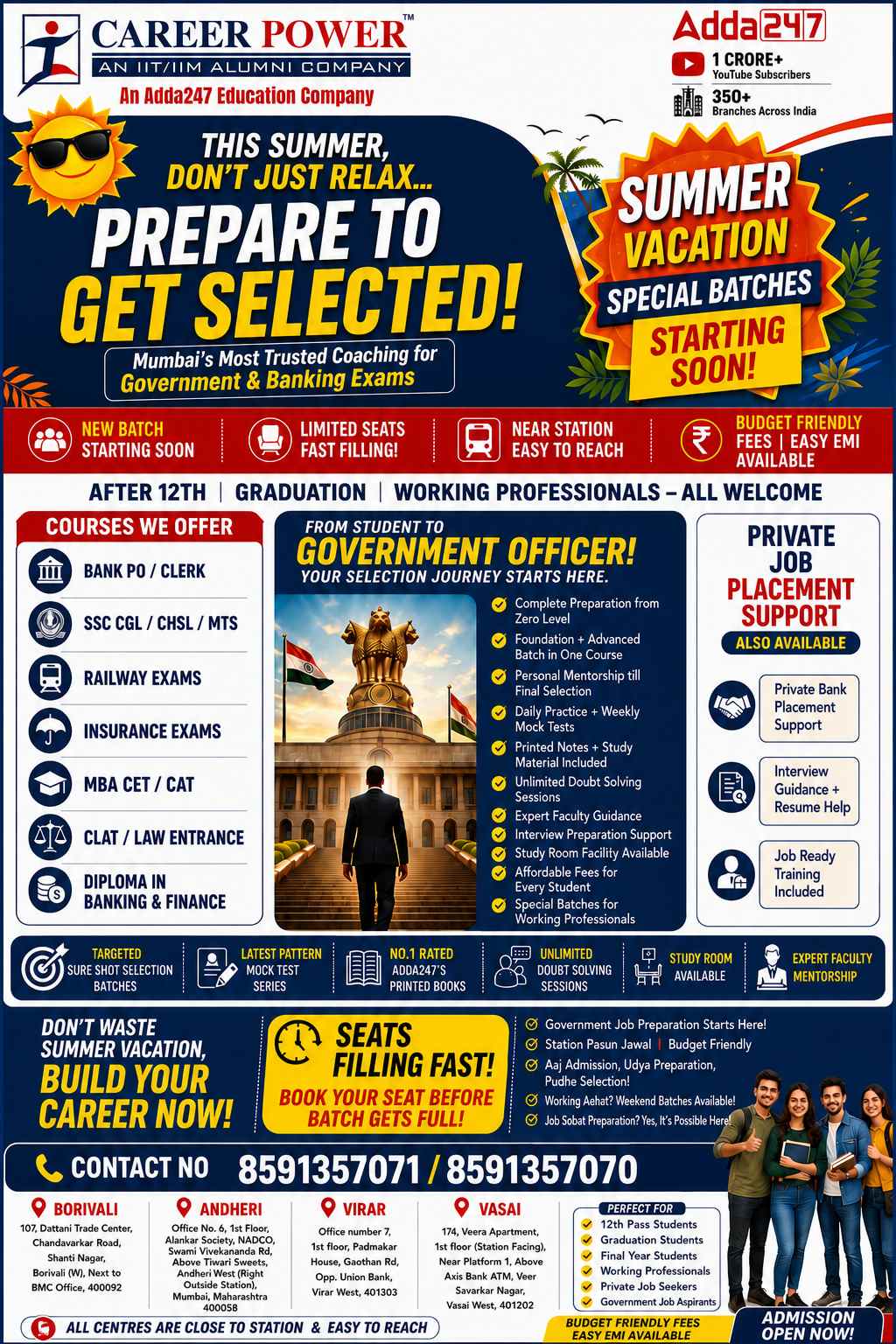
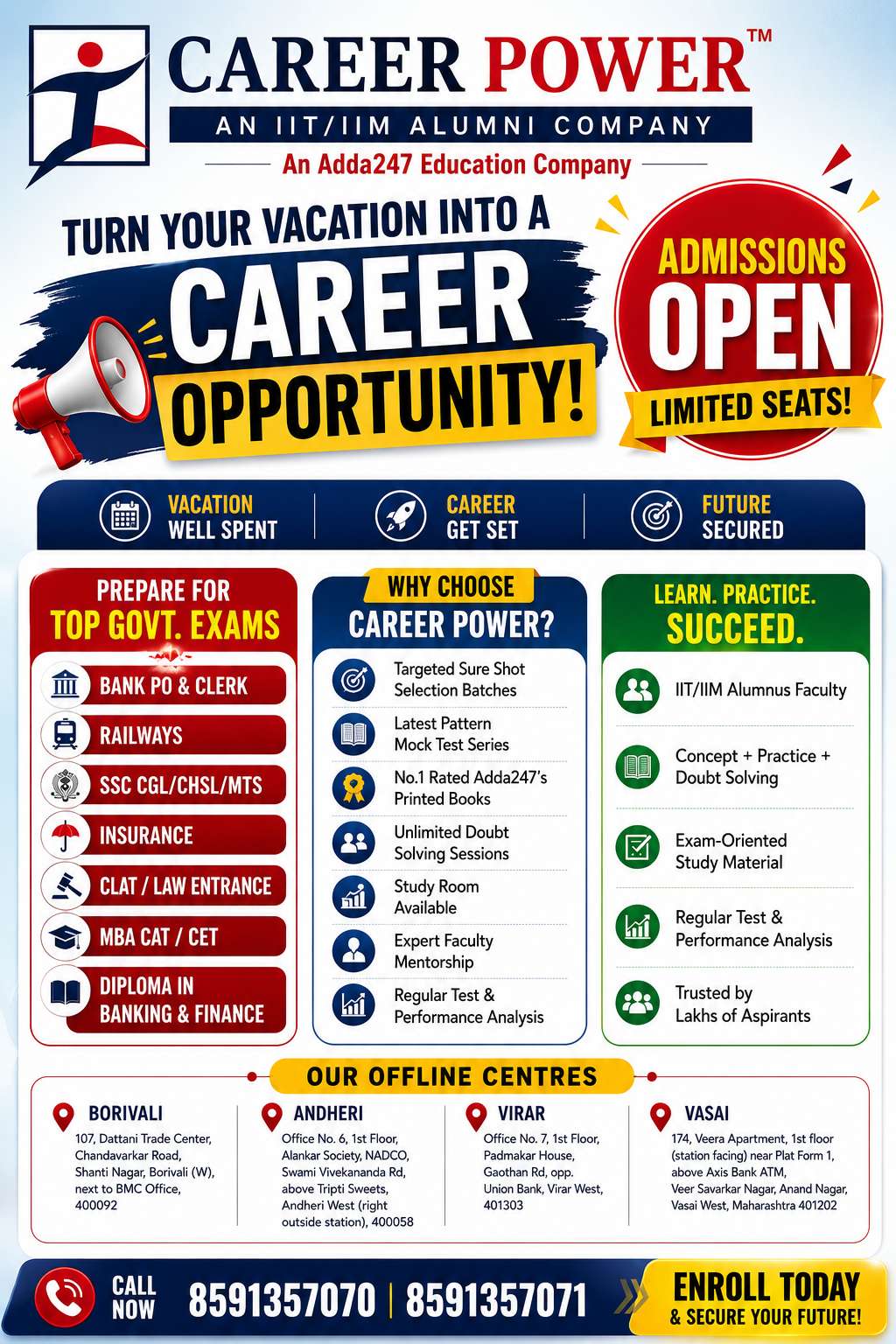
Career Power Mumbai Offline Centres sit right at the heart of that decision. They combine structured classroom teaching, printed study material, weekly mock tests and face-to-face mentor support — the exact ingredients that turn scattered preparation into a results-driven routine.
In this guide, you will learn what Career Power Mumbai Offline Centres actually are, why they matter in today’s hyper-competitive exam environment, how the classroom system works, how to choose the right centre and batch for your exam, and the mistakes that quietly destroy an aspirant’s chances. You will also find a comparison table, expert tips, recommended tools, troubleshooting advice and 15 detailed FAQs.
Introduction: Why Mumbai Aspirants Are Going Back to the Classroom
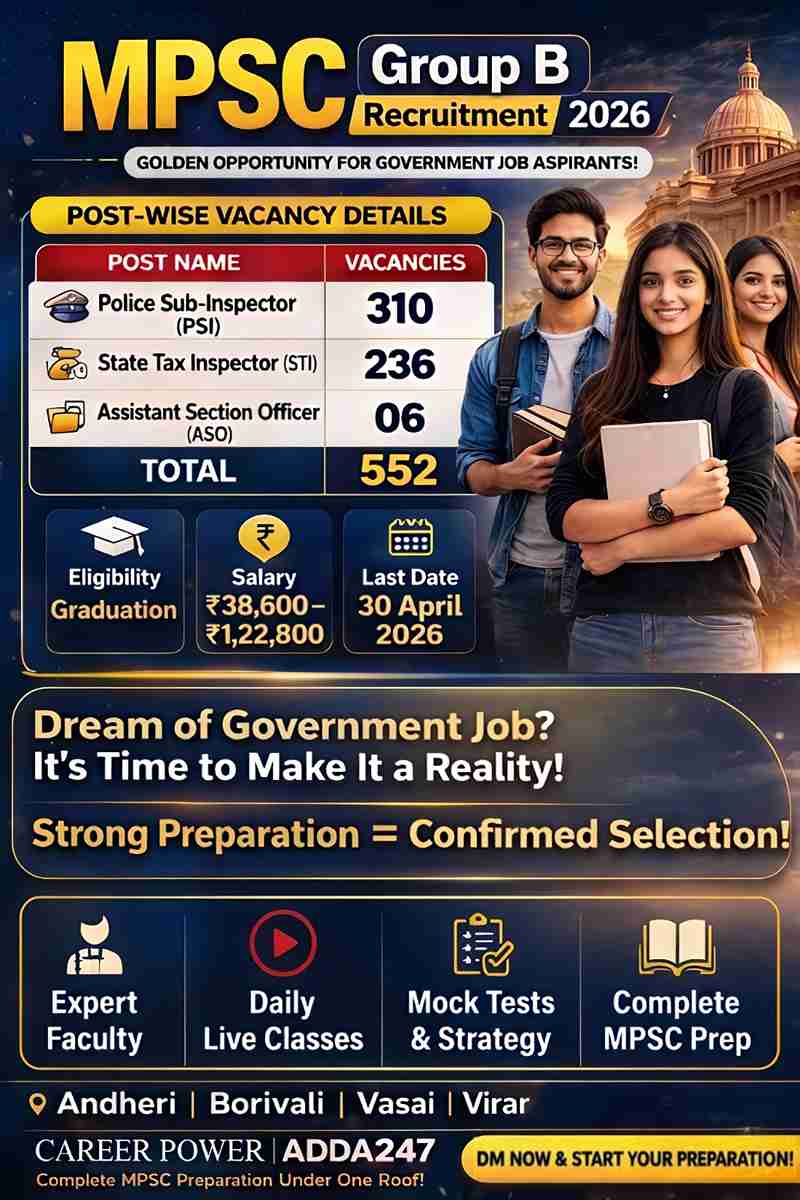
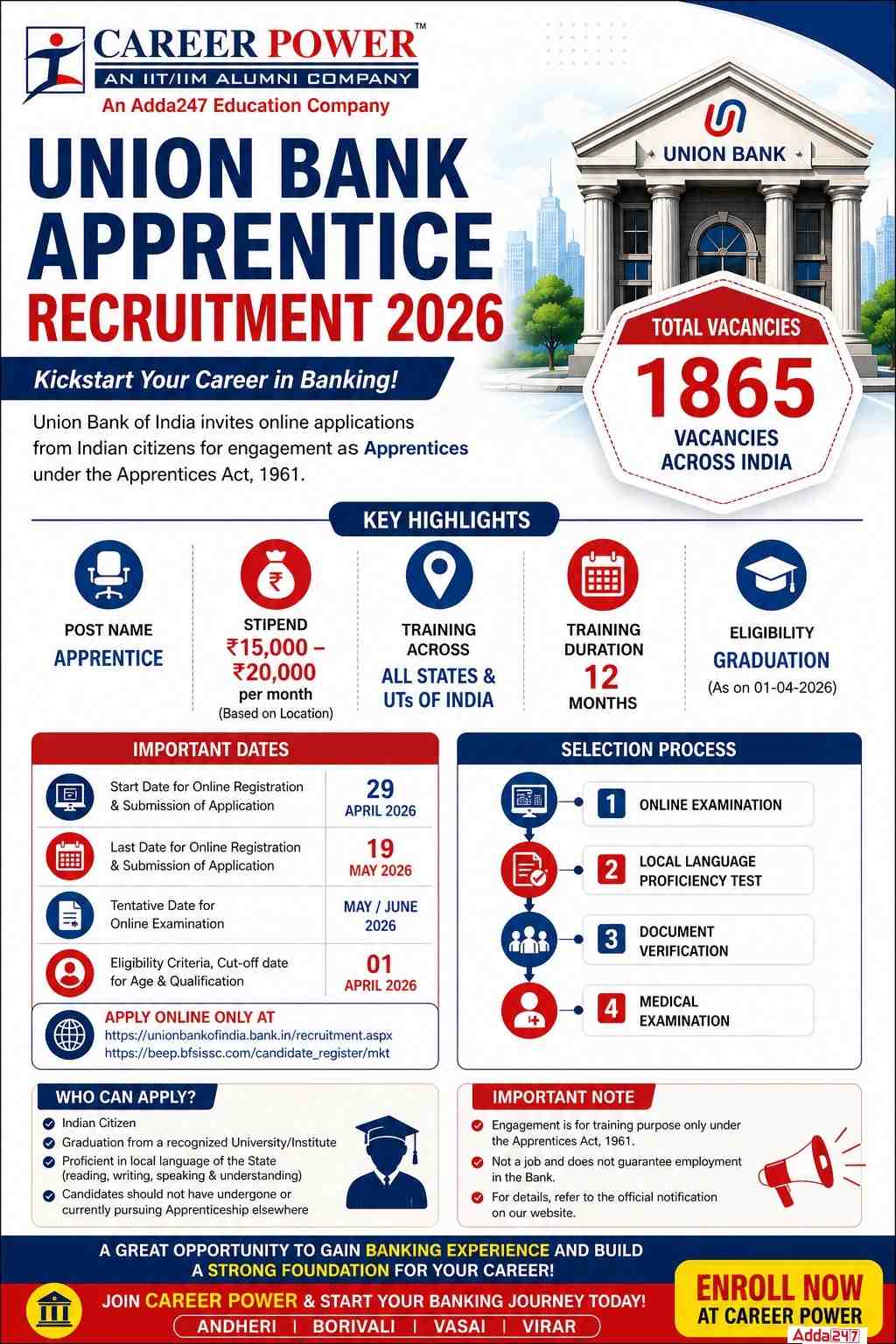
Mumbai runs on speed. Trains leave on schedule, offices demand output, and competition for a stable government job is fiercer than ever. Every year, lakhs of candidates from Mumbai and the wider MMR region — Andheri, Borivali, Dadar, Thane, Navi Mumbai, Kalyan — appear for exams like IBPS PO, SBI Clerk, SSC CGL, RRB NTPC and Mumbai Police recruitment. Only a fraction make it.
Here is what successful aspirants understand: the exam does not test how much you know. It tests how fast and accurately you can apply it under pressure. That skill is rarely built alone in a bedroom with headphones on. It is built in a room full of people solving the same problem, with a mentor correcting you in real time.
That is exactly the gap Career Power Mumbai Offline Centres fill. As the classroom arm of the Adda247 ecosystem, Career Power gives you the discipline of a physical classroom plus the technology of a digital learning platform — a hybrid system that suits both fresh graduates and working professionals.
Whether you are a first-time aspirant or someone who has already written two or three attempts, this guide will help you decide, plan and act. Read it end to end, then take the next step.
Key Takeaways
- Career Power Mumbai Offline Centres are physical classroom branches offering Bank, SSC, Railway, Defence and State exam coaching in Mumbai.
- You get three things online-only prep often lacks: fixed timetable, live doubt-solving and peer competition.
- Most students receive a hybrid package — classroom lectures plus digital mock tests and recorded backup classes.
- A 6-month batch with 3 hours of daily classroom time gives you roughly 390 hours of live teaching (26 weeks × 5 days × 3 hours).
- Attempting 25–30 full-length mock tests means close to 3,000 practice questions — the single biggest driver of score improvement.
- Fees, batch sizes and timings differ by centre and exam, so always attend a free demo class before paying.
- The best results come from a hybrid strategy: classroom learning + daily self-study + weekly mock analysis.
What Are Career Power Mumbai Offline Centres?
Career Power Mumbai Offline Centres are physical classroom branches where aspirants attend live, in-person coaching for competitive government exams. Instead of watching a recorded video at midnight, you sit in a structured classroom, follow a printed schedule, ask a faculty member a question the moment it arises, and write the same test as 40 other students who will be your competition one day.
At a typical centre, the offering includes:
- Classroom lectures by subject specialists for Quant, Reasoning, English, General Awareness and Current Affairs.
- Printed and digital study material mapped to the latest exam pattern and syllabus.
- Weekly and sectional mock tests with in-class discussion and performance reports.
- Doubt-clearing sessions after class and during dedicated doubt hours.
- Mentorship and strategy sessions covering exam selection, attempt strategy and time management.
- Digital access to recorded backup lectures, e-books and online test series through the learning app.
- Interview and skill support — mock interviews, group discussions and personality development for qualifying stages.
In short, Career Power Mumbai Offline Centres are a system, not just a class. That system is precisely what a serious aspirant needs when motivation dips in month three.
Why Career Power Mumbai Offline Centres Matter in 2025
Online content is everywhere and free. So why pay for a classroom? Because free content solves access, not execution.
- Competition is brutal and only rising. Cut-offs in IBPS, SBI and SSC have tightened. A single mark can separate selection from rejection.
- Exam patterns keep changing. New question types, revised sectional timing and updated syllabi mean you need a source that updates faster than a second-hand PDF.
- Self-study burnout is real. Roughly the same number of aspirants who fail due to lack of knowledge fail due to lack of consistency.
- Mumbai’s commute demands efficiency. A centre near your route turns travel time into revision time and forces a fixed study schedule.
- Doubt stagnation is the silent killer. One unresolved doubt in Data Interpretation can cost you an entire exam. Live faculty remove that block instantly.
- Peer benchmarking is priceless. Knowing you are 12th in a batch of 40 tells you more about your readiness than any blog post ever will.
This is why Career Power Mumbai Offline Centres matter: they convert intention into execution, and execution into selection.
Benefits of Joining Career Power Mumbai Offline Centres
- Structured discipline: A fixed timetable removes decision fatigue and daily procrastination.
- Face-to-face doubt solving: Follow-up questions get answered in seconds, not in a comment section two days later.
- Experienced faculty: Teachers who have tracked exam trends for years can spot high-yield topics instantly.
- Updated material: Study notes, current affair compilations and test series matched to the latest notifications.
- Exam-like test environment: Offline mock tests simulate real pressure far better than a laptop at home.
- Peer learning: Toppers in your batch share shortcuts, articles and reasoning frameworks you would never find alone.
- Hybrid flexibility: Missed a class? Recorded backup lectures and digital tests keep you on track.
- Mentorship and counselling: Guidance on which exam suits your profile, how many to target and when to peak.
- Locational convenience: With multiple centres across Mumbai, you can reduce travel time significantly.
- Better return on effort: You spend time studying instead of searching for what to study.
If you have been juggling YouTube playlists for months with no visible score improvement, bank exam coaching in Mumbai inside a real classroom is often the fastest reset button available.
How Career Power Mumbai Offline Centres Work
The classroom system follows a predictable, repeatable cycle. Understanding it helps you extract maximum value.
1. Batch Allocation and Orientation
Once you enrol, you are assigned a batch based on your exam, target date and available timings. An orientation session explains the syllabus, the weekly schedule, the test calendar and the support you can expect.
2. Concept Classes
Faculty teach concepts from the base level upward, then push into exam-level difficulty. Classes are usually 2–3 hours per subject, with daily practice questions assigned at the end of every session.
3. Daily Practice and Assignment Review
Homework is not optional. Assignments are reviewed so you learn where your method breaks, not just whether your answer was right.
4. Weekly and Sectional Tests
Tests run on a fixed calendar. Over a six-month batch, that typically works out to dozens of sectional tests plus multiple full-length mocks.
5. Analysis Sessions
This is the most underrated step. Faculty walk through the paper, discuss alternate shortcuts and explain why toppers picked one question over another.
6. Doubt and Mentorship Slots
Dedicated time is reserved for one-on-one and group doubt solving, plus periodic mentorship reviews of your performance trend.
7. Revision and Crash Phase
As the exam approaches, the focus shifts to revision classes, high-yield topics and back-to-back mock practice. Feel free to strengthen this phase with a daily online test series so you never run out of practice material.
Quick maths: A 6-month batch with 3 hours of daily classroom teaching equals about 390 hours of live instruction — the equivalent of nearly 50 full working days of dedicated coaching.
Step-by-Step Guide: How to Join Career Power Mumbai Offline Centres
-
Step 1 — Define your target exam
Do not chase every notification. Pick one primary exam (for example, IBPS PO coaching in Mumbai) and one backup (such as SSC CGL coaching). Your syllabus overlap is your safety net.
-
Step 2 — Shortlist the nearest centre
Map centres against your daily travel route. A centre 20 minutes away will be attended consistently; one 90 minutes away will be skipped within a month.
-
Step 3 — Check faculty for your exam
Ask specifically who teaches Quant, Reasoning and English for your target exam, and how long they have been teaching it. Faculty quality beats infrastructure every single time.
-
Step 4 — Attend a free demo class
Judge four things: teaching clarity, pace, classroom discipline and how patiently the faculty handles questions.
-
Step 5 — Compare batch timings
Morning, evening and weekend batches exist. Working professionals should prioritise weekend or hybrid batches to protect their routine.
-
Step 6 — Ask about batch size and seat availability
Smaller batches mean more personal attention. Popular batches fill early, so enquire ahead of the notification window.
-
Step 7 — Understand the full fee structure
Ask what the fee includes: study material, test series, digital access, interview preparation and doubt sessions. Compare on total value, not headline price.
-
Step 8 — Confirm instalment or EMI options
Many students use instalment plans to spread the cost. Confirm terms in writing before payment.
-
Step 9 — Prepare your documents
Keep ID proof, address proof, qualification certificates, passport-size photos and contact details ready for smooth admission.
-
Step 10 — Enrol, then commit for 90 days
Give the system 90 days of honest effort — attend every class, write every test, review every mistake. That is when results start becoming visible.
Real-Life Examples: How Aspirants Use These Centres
Example 1 — The Working Professional (Andheri)
A 26-year-old IT support engineer works 9-to-6 and has already failed two bank attempts. She joins a weekend batch at a nearby centre, writes a full mock every Sunday and reviews it on Monday evenings using recorded lectures. Over four months, her accuracy in Reasoning climbs steadily because her doubts are cleared in person rather than ignored.
Example 2 — The Final-Year Student (Dadar)
A B.Com student attends daily classroom classes alongside college. The printed material and weekly tests replace the chaos of scattered PDFs. Because his batchmates are also preparing, mock rankings create healthy pressure — and his percentile improves faster than it did during a year of solo self-study.
Example 3 — The Repeater (Thane)
A candidate who cleared prelims but stumbled in mains joins a crash revision batch. The value here is not new concepts but new strategy: question-selection order, attempt caps per section and time discipline. He learns that the problem was never knowledge — it was pacing.
Example 4 — The First-Generation Aspirant (Navi Mumbai)
With no one at home to guide her, she uses the centre’s counselling session to understand which exams match her qualification and timeline. Mentorship becomes the difference between random preparation and a clear three-exam roadmap.
Note: These examples are illustrative profiles that reflect typical aspirant journeys. Your personal results will depend on your consistency and effort.
Comparison Table: Offline vs Online vs Self-Study
| Parameter | Career Power Mumbai Offline Centres | Online Live Coaching | Pure Self-Study |
|---|---|---|---|
| Classroom interaction | Face-to-face, highest | Chat-based, medium | None |
| Discipline & routine | Very high (fixed timetable) | Medium | Low |
| Doubt solving speed | Immediate | Same-day to next-day | Depends entirely on you |
| Peer competition | Strong, in-room ranking | Limited | None |
| Flexibility | Moderate (backup lectures help) | High | Highest |
| City travel required | Usually yes | No | No |
| Study material quality | Updated & exam-aligned | Updated | Uneven |
| Mock test environment | Real exam-like | Home-based | Self-managed |
| Best suited for | Consistency-focused aspirants | Small-town & working aspirants | Highly disciplined, advanced aspirants |
Popular Course Categories at a Glance
| Course Category | Key Exams | Ideal For |
|---|---|---|
| Banking | IBPS PO/Clerk, SBI PO/Clerk, RBI Grade B | Graduates targeting PSU banks |
| SSC | CGL, CHSL, MTS, GD Constable | Graduates & 12th pass aspirants |
| Railways | RRB NTPC, Group D, ALP | Large-vacancy long-game aspirants |
| State & Police | Maharashtra state exams, police recruitment | Local candidates seeking stable state jobs |
| Crash / Revision | Pre-exam revision for any of the above | Repeaters and last-stage aspirants |
Common Mistakes Aspirants Make at Career Power Mumbai Offline Centres
- Joining the centre and studying nowhere else. Classroom time teaches; self-study time internalises. Aim for at least 2–3 hours of personal study daily.
- Choosing a centre purely on price. The cheapest batch taught by the wrong faculty is the most expensive mistake you can make.
- Ignoring mock test analysis. Writing 30 tests without reviewing them is the same as writing three.
- Attending classes passively. No notes, no questions, no follow-up — that is entertainment, not preparation.
- Switching centres mid-course. Every switch costs you two to three weeks of momentum.
- Targeting five exams at once. Multi-exam strategy only works when syllabi genuinely overlap.
- Skipping English and General Awareness. These sections are cheap marks that most aspirants neglect.
- Not using digital backup material. If you paid for recorded lectures and online tests, use them.
- Comparing your chapter progress with others. Compare your mock scores with your own last mock, not with someone else’s journey.
- Quitting after one bad test. One low score is data, not a verdict.
Avoid these, and you will already be ahead of most of the room. For structured reading support between classes, bookmark our government exam preparation blog.
Expert Tips from Senior Faculty and Toppers
- Sit in the first three rows. Attention rises automatically when distractions reduce.
- Ask at least one question per class. It converts passive listening into active learning.
- Maintain a single “error notebook.” Every wrong mock question goes in it. Revise it weekly.
- Treat every mock as the real exam. OMR sheet, timer on, phone off, no breaks.
- Cap your attempts per section. Speed without accuracy is wasted effort.
- Do accuracy first, speed second. Speed follows accuracy naturally; the reverse rarely happens.
- Build one strong section instead of five weak ones. A scoring section can carry your overall cut-off.
- Revise current affairs weekly, not monthly. One weekly compilation beats cramming 300 pages in the last five days.
- Talk to seniors who cleared. Their shortcuts are compressed experience.
- Protect your sleep. A tired brain makes calculation errors that no coaching can fix.
Best Practices for Getting the Most Out of Career Power Mumbai Offline Centres
- Follow the timetable religiously for the first 90 days. Motivation is unreliable; routine is not.
- Pre-read before class and revise within 24 hours. Retention doubles with same-day revision.
- Attend every doubt session. It is included in your fee — use it fully.
- Track three numbers only: accuracy %, attempt count, and sectional time per test.
- Use the digital test series for extra practice in addition to classroom tests.
- Build a weekly review ritual every Sunday: analyse tests, update the error notebook, plan the next week.
- Stay bilingual where possible. Comfortable language reduces silly errors.
- Network with batchmates. Group study for General Awareness is exceptionally efficient.
- Get faculty feedback on your strategy every month, not just on your marks.
- Plan backward from the exam date. Work out how many weeks you have, then divide them by topic.
Recommended Tools to Pair With Classroom Coaching
| Tool / Resource | Purpose | How to Use It |
|---|---|---|
| Learning app with recorded lectures | Backup for missed classes | Watch within 48 hours of a missed session |
| Online mock test series | Unlimited practice between classroom tests | One sectional test daily + one full mock weekly |
| Previous years’ papers | Pattern recognition | Solve at least the last 5 years per exam |
| Daily current affairs compilation | General Awareness & Banking Awareness | 15 minutes daily, revise weekly |
| Error notebook (physical or digital) | Mistake tracking | Review every Sunday without exception |
| Timer / stopwatch | Speed building | Time every practice set, not just mocks |
| Spaced-repetition app | Vocabulary & formulas | 10 minutes daily |
| Calendar app with weekly block | Time management | Block study slots like office meetings |
| Exam notification tracker | Deadline management | Check weekly to avoid missed applications |
For a deeper walkthrough, see our guide to the best online mock tests for bank and SSC exams.
Troubleshooting: Common Problems and Their Fixes
“I attend classes but my mock scores are not improving.”
You are probably not analysing tests. Fix it by spending 90 minutes reviewing every mock: classify each wrong answer as a concept gap, a calculation slip or a time-pressure error. Address each category differently.
“I keep missing classes because of work.”
Shift to a weekend or hybrid batch, and use recorded backup lectures within 48 hours. Missing a class is fine; skipping the topic permanently is not.
“Quant feels impossible for me.”
Stop chasing advanced problems. Master the top 15 calculation-based topics first — percentage, ratio, averages, simple and compound interest, time-work, time-distance, profit-loss, mensuration basics and data interpretation. These usually carry a large share of marks.
“The centre is too far and travel is exhausting me.”
Transfer to a closer centre if available, or move to a weekend/hybrid batch. Use commute time for vocabulary, current affairs or audio revision.
“My English section is my weakest link.”
Build a two-pronged routine: 20 minutes of daily reading plus 30 minutes of grammar rules and practice sets from the study material. English responds quickly to consistency.
“I feel demotivated after a bad test.”
Book a mentorship slot. Faculty can help you see patterns across multiple tests rather than one bad result. Also compare your score with your own past scores, not with the topper’s.
“Fees feel high for me.”
Ask about instalment plans, scholarship tests and seasonal offers. Also calculate total value — material, test series, digital access and interview prep included — before deciding it is expensive.
“I do not understand the medium used in class.”
Request a batch in your preferred medium or ask faculty to explain key concepts in Hindi where permitted. Never sit through a class you cannot follow.
FAQs on Career Power Mumbai Offline Centres
1. What are Career Power Mumbai Offline Centres?
They are physical classroom branches in Mumbai where aspirants attend in-person coaching for Bank, SSC, Railway, Defence and State Government exams, with printed material, weekly mock tests and face-to-face doubt-solving.
2. Which exams can I prepare for at Career Power Mumbai Offline Centres?
Commonly IBPS PO and Clerk, SBI PO and Clerk, RBI Grade B, NABARD, SSC CGL, CHSL, MTS and GD, Railway NTPC, Group D and ALP, Maharashtra state exams, and police recruitment. Availability varies by centre.
3. Where are Career Power Mumbai Offline Centres located?
Centres are spread across major Mumbai hubs and the wider MMR belt. Because locations and branch details change, always confirm the current list and address on the official website before visiting.
4. How much do Career Power Mumbai Offline Centres cost?
Fees depend on the exam, batch duration and centre. Foundation and short-term batches cost less than year-long comprehensive programmes. Many batches support instalments and seasonal discounts, so request the current fee card at your nearest centre.
5. Do Career Power Mumbai Offline Centres give online access too?
Yes. Most classroom students also get digital mock tests, recorded backup lectures and app access, making it a genuinely hybrid programme.
6. Can working professionals join Career Power Mumbai Offline Centres?
Yes. Weekend, evening and hybrid batches are designed for professionals and final-year students.
7. Are demo classes available before admission?
Most centres offer a free demo class or counselling session. Always attend one before paying so you can assess faculty and classroom environment.
8. What is the typical batch size?
Batch sizes are kept moderate to allow personal attention. Confirm your specific batch’s strength during counselling.
9. What if I miss a class?
Cover it through recorded backup lectures, peer notes, study material and faculty doubt slots. Some centres also allow you to attend the same topic in another batch, subject to seats.
10. Are batches available in both English and Hindi medium?
Many Mumbai batches offer bilingual teaching or separate medium options. Confirm for your exam and centre.
11. What documents do I need for admission?
Usually ID proof, address proof, educational certificates, passport-size photographs and contact details.
12. How do I book a seat?
Visit the centre, attend a demo, select your exam and batch, submit documents and pay the fee or first instalment. Popular batches fill on a first-come, first-served basis.
13. Is offline coaching better than online coaching?
Offline offers discipline, live doubt-solving and peer competition; online offers flexibility and lower cost. A hybrid approach — classroom classes plus digital tests — typically produces the best results.
14. How many mock tests should I attempt before the exam?
Aim for at least 25–30 full-length mock tests. That is roughly 3,000 practice questions, which builds speed, accuracy and exam stamina.
15. Do centres help with interview preparation?
For exams with interview stages, centres typically provide mock interviews, group discussions and personality development sessions after written results.
Conclusion
Preparation for government exams is not about motivation — it is about systems. Career Power Mumbai Offline Centres exist to give you that system: a fixed timetable, expert faculty, updated material, real mock tests, honest feedback and a room full of people chasing the same dream.
You do not need superhuman discipline to crack a government exam. You need a structure that works even on days when you do not feel like it, and a mentor who tells you the truth about your performance. That is precisely what a well-chosen classroom provides.
Shortlist two centres near you this week. Attend two demo classes. Ask about batch timings, faculty and total fees. Then choose, enrol and commit to 90 disciplined days. Your first honest mock after that period will tell you everything you need to know about how far you have come.
Ready to explore further? Visit our hub for government exam coaching in Mumbai and compare your options side by side.
Take the Next Step Today
Do not let another notification pass while your preparation stays scattered. Book a free demo class and counselling session at your nearest Career Power Mumbai Offline Centre, check the batch calendar and start a routine that actually sticks.
Prefer studying with digital support too? Explore our online mock test series and start practising today.