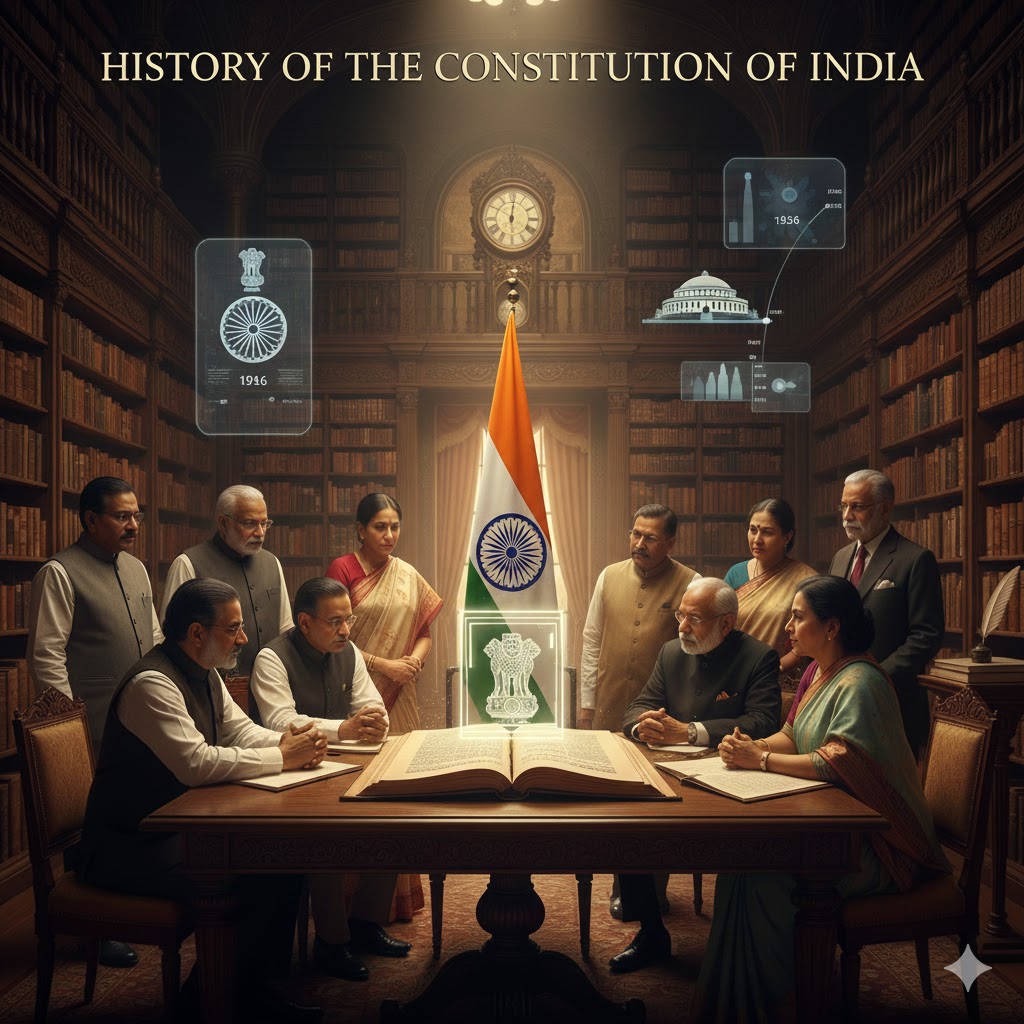
The History of our Constitution: A Complete, Easy-to-Follow Guide for 2025
Summary: The History of our Constitution in 60 Seconds
The History of our Constitution is the story of how a group of ordinary people, fed up with unchecked power, built a written rulebook for government — and then spent the next two centuries improving it.
- Roots: Ideas stretch back to Magna Carta (1215) and the English Bill of Rights (1689).
- Break point: The Declaration of Independence (1776) rejected monarchical rule outright.
- First draft: The Articles of Confederation (1781) failed because the national government was too weak.
- The turning point: The Philadelphia Convention (1787) produced a completely new framework.
- Ratification: Nine states approved it by June 21, 1788; the Bill of Rights followed in 1791.
- Living document: 27 amendments — the most recent in 1992 — prove that constitutional history is still being written.
Introduction: Why The History of our Constitution Belongs in Your Brain
Imagine trying to play a board game where nobody wrote down the rules. Every move depends on whoever is shouting loudest. That was government before constitutions — and honestly, it is still what happens in countries where the rulebook gets ignored.
When you learn The History of our Constitution, you are not memorizing dusty dates. You are learning how human beings figured out a way to limit power, protect dissent, and hand a workable country to the next generation. That is a genuinely thrilling story — full of walkouts, shouting matches, secret committee meetings, and one delegate who showed up in a carriage despite being sick.
In this guide, you will discover what a constitution actually is, why its history matters to you personally, how the whole process unfolded step by step, the mistakes people make when they study it, and the expert tips that make it stick. Whether you are a student, a teacher, a curious citizen, or a content creator writing about civics, this post gives you the full picture in plain English.
If you want the quick version first, jump to our constitutional timeline infographic — then come back here for the deep dive.
Key Takeaways
- ✅ The History of our Constitution did not begin in 1787 — it began centuries earlier with charters that forced kings to obey the law.
- ✅ The first American framework, the Articles of Confederation, failed because it gave the national government no power to tax or enforce laws.
- ✅ The 1787 Philadelphia Convention succeeded because of compromises: the Great Compromise, the Three-Fifths Compromise, and the Bill of Rights promise.
- ✅ Ratification was not guaranteed — it took nine states, fierce newspaper debates, and the Federalist Papers to get it over the line.
- ✅ The Constitution has been amended only 27 times in over 230 years, proving that stability and change can coexist.
- ✅ Other nations — including India (1950) and South Africa (1996) — built on the same constitutional inheritance, adapting it to their own cultures.
- ✅ Understanding this history makes you a sharper voter, thinker, and decision-maker today.
Table of Contents
- Summary: The History of our Constitution in 60 Seconds
- Introduction
- Key Takeaways
- What Is the History of our Constitution?
- Why The History of our Constitution Matters
- Benefits of Learning The History of our Constitution
- How It Works: The Layers of Constitutional History
- Step-by-Step Guide: How the Constitution Was Built
- Examples: Milestones That Changed Everything
- Comparison Tables
- Common Mistakes People Make
- Expert Tips
- Best Practices for Studying Constitutional History
- Recommended Tools
- Troubleshooting
- FAQs About The History of our Constitution
- Conclusion
- Call to Action
What Is the History of our Constitution?
The History of our Constitution is the chronological record of how a society decided what government may and may not do — and how that decision was written down, argued over, ratified, and revised over time.
A constitution is the supreme law of a country. It creates institutions (legislatures, courts, executives), distributes power between them, and lists the rights that government cannot take away. Its history is the story of every influence, crisis, compromise, and amendment that shaped that document.
Think of it in three layers:
- Ancient and medieval roots — Magna Carta (1215), the Petition of Right (1628), the English Bill of Rights (1689), and Enlightenment thinkers like Locke and Montesquieu.
- The founding era — colonial charters, the Declaration of Independence (1776), the Articles of Confederation (1781), the Philadelphia Convention (1787), and ratification (1788–1790).
- The living era — the Bill of Rights (1791) and 27 amendments through 1992, plus landmark court decisions that reinterpreted the text.
Want to go deeper on the philosophical foundations? Read our companion article, Magna Carta to Montesquieu: The Ideas Behind The History of our Constitution.
Why The History of our Constitution Matters
You might be thinking: “I get the facts — but why should I care?” Here is why this history earns a place in your mental filing cabinet:
- It explains today’s headlines. Debates over free speech, gun laws, executive power, and privacy are all echoes of arguments that started in the 1780s.
- It protects your rights. Every freedom you enjoy exists because someone wrote it down and someone else defended it in court.
- It teaches you how change actually happens. Compromise, coalition-building, and persistence — the same skills you need in business and life.
- It guards against repeating errors. The Articles of Confederation collapsed for predictable reasons. Knowing them helps us spot weak institutions today.
- It makes you a better citizen. Informed participation is the entire point of a constitutional republic.
- It is a global story. Over 100 countries borrowed ideas from this tradition when writing their own constitutions.
Benefits of Learning The History of our Constitution
Studying constitutional history pays real, practical dividends. Here is what you gain:
- Sharper critical thinking. You learn to ask who benefits from a rule and who is excluded.
- Better academic performance. Students who understand the narrative remember dates effortlessly — the story carries the facts.
- Stronger civic confidence. You can challenge misinformation about the Constitution with primary sources.
- Improved writing and argumentation. The Federalist Papers are a masterclass in persuasion.
- Career advantages. Law, journalism, policy, education, and content marketing all reward this knowledge.
- Motivation and perspective. Knowing that flawed people built something durable reminds you that imperfect effort still changes history.
How It Works: The Layers of Constitutional History
The History of our Constitution works like geological strata — each layer pressed down on the one before it. Understanding the sequence is the fastest route to genuine comprehension.
The Timeline at a Glance
| Year | Milestone | Why It Matters |
|---|---|---|
| 1215 | Magna Carta | First written limit on a monarch’s power |
| 1620 | Mayflower Compact | Self-government by agreement of the governed |
| 1689 | English Bill of Rights | Parliament’s supremacy; rights for subjects |
| 1754 | Albany Plan of Union | Early attempt at colonial unity (rejected) |
| 1765 | Stamp Act | Spark that ignited colonial resistance |
| 1776 | Declaration of Independence | Formal break from monarchy |
| 1781 | Articles of Confederation ratified | First national framework — too weak |
| 1787 | Philadelphia Convention | Drafted the Constitution we know |
| 1788 | Ratification by 9 states | Constitution becomes operative |
| 1791 | Bill of Rights ratified | First 10 amendments protect liberties |
| 1865–1870 | 13th, 14th, 15th Amendments | Abolition, citizenship, voting rights |
| 1920 | 19th Amendment | Women win the vote |
| 1971 | 26th Amendment | Voting age lowered to 18 |
| 1992 | 27th Amendment | Most recent amendment — 203 years after proposal |
For a deeper look at how these amendments were passed, see our guide to constitutional amendments explained simply.
Step-by-Step Guide: How the Constitution Was Built
Follow these eight steps and you will understand The History of our Constitution better than most adults do.
Step 1: Start With the Charter Tradition
Kings needed money; nobles wanted rights. The bargain struck in 1215 created the radical idea that even a monarch answers to law. Later charters and the 1689 English Bill of Rights refined the principle.
Step 2: Trace the Colonial Experience
Each American colony operated under its own charter with a governor, a legislature, and (sometimes) a written bill of rights. Colonists learned self-government by doing it — for more than 150 years.
Step 3: Watch the Crisis Escalate
New taxes after 1765 triggered boycotts, protests, and eventually the First Continental Congress (1774). By 1776, independence was on the table.
Step 4: Declare the Principles
The Declaration of Independence (July 4, 1776) stated the philosophy: governments derive power from consent, and people may abolish governments that abuse them. For more, read the Declaration of Independence explained line by line.
Step 5: Experience Failure With the Articles of Confederation
The Articles created a “league of friendship” with a one-house Congress and no power to tax, regulate trade, or compel states. War debts went unpaid, trade wars erupted between states, and Shays’ Rebellion (1786) exposed the system’s inability to keep order.
Step 6: Convene in Philadelphia
Delegates met from May 25 to September 17, 1787. George Washington presided; James Madison shaped the agenda. Instead of merely revising the Articles, they wrote an entirely new Constitution.
Step 7: Fight It Out — and Compromise
- Virginia Plan: Representation by population (favored large states).
- New Jersey Plan: Equal representation per state (favored small states).
- Great (Connecticut) Compromise: A two-house Congress — population-based House, equal Senate.
- Three-Fifths Compromise: A morally indefensible bargain on enslaved people. Acknowledge it honestly; it shapes the story.
- Electoral College: A compromise on choosing the president.
Step 8: Ratify, Then Amend
Nine of thirteen states had to approve. Federalists (Madison, Hamilton, Jay) argued in the Federalist Papers; Anti-Federalists demanded a Bill of Rights. New Hampshire became the ninth ratifying state on June 21, 1788. The first Congress then passed 12 amendments; 10 were ratified on December 15, 1791.
Dig into the persuasion campaign here: Federalist Papers summary: 85 essays in plain English.
Examples: Milestones That Changed Everything
- Marbury v. Madison (1803): Established judicial review — the courts can strike down laws that violate the Constitution. Explore judicial review and Marbury v. Madison.
- The 14th Amendment (1868): Guaranteed citizenship and equal protection, becoming the foundation of civil rights rulings in the 20th century.
- The 19th Amendment (1920): After decades of campaigning, women gained the vote — proof that constitutional change is a marathon, not a sprint.
- Brown v. Board of Education (1954): Ended legal segregation in public schools using the 14th Amendment’s equal protection clause.
- The 27th Amendment (1992): Proposed in 1789 and ratified 203 years later — the record for the slowest constitutional victory.
- India’s Constitution (1950): Drafted under Dr. B.R. Ambedkar, it borrowed fundamental rights and judicial review from the American model, parliamentary government from Britain, and directive principles from Ireland.
- South Africa’s Constitution (1996): Built on dignity, equality, and freedom, and widely regarded as a model of rights protection.
Comparison Tables
Table 1: Articles of Confederation vs. The Constitution of the United States
| Feature | Articles of Confederation (1781) | Constitution (1789) |
|---|---|---|
| Structure | One-house Congress | Bicameral Congress + President + Courts |
| Taxation power | Could only request money from states | Can levy taxes directly |
| Trade regulation | None at national level | Congress regulates interstate commerce |
| Executive | None | Independent President |
| Judiciary | No national courts | Supreme Court + federal courts |
| Amendment process | Required unanimous state approval | Two-thirds Congress + three-fourths states |
| Result | Collapsed under pressure | Endured 230+ years with 27 amendments |
Table 2: The History of our Constitution — U.S. vs. India vs. U.K.
| Criterion | United States (1789) | India (1950) | United Kingdom (uncodified) |
|---|---|---|---|
| Form | Single written document | Single written document (longest in the world) | Uncodified statutes + conventions |
| Length | ~7,600 words (original) | ~145,000 words | No single text |
| Rights | Bill of Rights (1791) | Fundamental Rights (Part III) | Human Rights Act + common law |
| Head of government | Directly chosen via Electoral College | Prime Minister from the legislature | Prime Minister from Parliament |
| Amendment difficulty | High | Moderate | Low (ordinary legislation) |
Common Mistakes People Make When Studying The History of our Constitution
- ❌ Starting in 1787. Skipping Magna Carta and colonial charters makes the founding debates feel random.
- ❌ Treating the founders as a united group. They disagreed fiercely — walkouts and fistfights nearly ended the convention.
- ❌ Ignoring the failures. The Articles of Confederation and the Albany Plan are essential context, not trivia.
- ❌ Confusing the Declaration with the Constitution. One announced independence; the other built a government.
- ❌ Skipping the state ratifying conventions. That is where the real arguments happened and where the Bill of Rights was demanded.
- ❌ Assuming the document is frozen. Twenty-seven amendments and countless court rulings keep it alive.
- ❌ Romanticizing the compromises. The Three-Fifths Compromise protected slavery — honesty makes your writing more credible.
- ❌ Relying only on summaries. Primary sources like Madison’s notes reveal the messy, human reality.
Expert Tips From Civics Educators
- 💡 Learn the story, not the list. Connect each date to a problem someone was trying to solve.
- 💡 Teach the conflicts. Big-state vs. small-state, North vs. South, federal vs. state power — these tensions still organize modern politics.
- 💡 Use the “reading ladder.” Start with a one-page timeline, then the Preamble, then Article I, then the Bill of Rights.
- 💡 Read the Federalist Papers out loud. Essay No. 10 and No. 51 sound best when spoken.
- 💡 Anchor every amendment to a real case. Facts stick better than abstractions.
- 💡 Compare globally. Understanding India’s and South Africa’s constitutions sharpens your grasp of your own.
- 💡 Revisit yearly on Constitution Day (September 17). Repetition across years builds permanent memory.
Best Practices for Studying Constitutional History
- Use primary sources first, commentary second. The Constitution, Madison’s notes, and the Federalist Papers are all freely available.
- Build a personal timeline. A simple spreadsheet with Year / Event / Significance beats passive reading.
- Study in chronological and thematic layers. Cover the timeline once, then re-read themes like federalism and rights.
- Discuss it with others. A 20-minute debate teaches more than an hour of reading.
- Connect history to current events. Tie each amendment to a headline from this month.
- Cite your sources online. If you publish content, link to authoritative archives for credibility and SEO trust signals.
- Keep a glossary. Terms like “federalism,” “enumerated powers,” and “due process” need clear definitions.
Recommended Tools and Resources
- National Archives (archives.gov): Free high-resolution scans of the Constitution, Bill of Rights, and Declaration.
- Library of Congress (loc.gov): Madison’s convention notes and the Federalist Papers.
- Constitution Annotated (constitution.congress.gov): The full text with expert legal commentary.
- Oyez (oyez.org): Supreme Court audio and case summaries.
- Khan Academy: Free civics videos ideal for beginners and students.
- Your Blog’s Own Study Aids: Start with our Preamble explained for beginners, then our Bill of Rights history guide, and finish with our separation of powers explainer.
- Printable quiz: Test yourself with our free constitution quiz.
Troubleshooting: Fixing Common Study Problems
- Problem: You keep forgetting dates. Fix: Attach each date to a story or a person. “1787 = the summer of arguments in Philadelphia” beats rote memorization.
- Problem: The legal language feels impenetrable. Fix: Read a plain-English translation alongside the original, paragraph by paragraph.
- Problem: You cannot see why the compromises matter. Fix: Ask what would have happened without them — the convention likely would have collapsed.
- Problem: You are overwhelmed by 27 amendments. Fix: Group them into themes: rights, structure, and process.
- Problem: You cannot tell primary from secondary sources. Fix: If it was written by a founder or a court, it is primary. If it interprets them, it is secondary.
- Problem: Your notes are a wall of text. Fix: Switch to tables, timelines, and mind maps — your brain loves structure.
- Problem: You are bored. Fix: Watch a debate or read the dissenting opinion. Conflict restores curiosity instantly.
FAQs About The History of our Constitution
1. When does The History of our Constitution officially begin?
Most historians start the story with Magna Carta (1215), then trace it through the English Bill of Rights (1689), the Declaration of Independence (1776), and the Articles of Confederation (1781). The decisive moment is the Philadelphia Convention of 1787.
2. Who is called the “Father of the Constitution”?
James Madison. He arrived early, took detailed notes, drafted the Virginia Plan, and co-wrote the Federalist Papers. George Washington presided over the convention, but Madison supplied the intellectual architecture.
3. Why did the Articles of Confederation fail?
The national government could not tax, could not regulate interstate commerce, had no executive, had no national courts, and needed unanimous state consent to amend anything. War debt went unpaid and internal unrest grew.
4. What was the Great Compromise?
Also called the Connecticut Compromise, it created a two-house Congress: the House of Representatives based on population and the Senate with equal representation for each state. It resolved the deadlock between large and small states.
5. How many amendments does the Constitution have?
Twenty-seven. The first ten — the Bill of Rights — were ratified in 1791. The most recent, the 27th Amendment on congressional pay, was ratified in 1992.
6. What is the difference between the Declaration of Independence and the Constitution?
The Declaration (1776) announced the colonies’ separation from Britain and stated political principles. The Constitution (1787–1789) established the actual structure and powers of the new government.
7. Why is the Bill of Rights so important to The History of our Constitution?
Anti-Federalists refused to ratify without written guarantees of individual liberty. The Bill of Rights was the price of ratification, and it remains the clearest statement of what government may not do.
8. How did the Constitution influence other countries?
Its ideas — written limits on power, separated branches, judicial review, and enumerated rights — shaped constitutions worldwide, including India (1950), Japan (1947), Germany (1949), and South Africa (1996).
9. Was slavery part of the original Constitution?
Yes. Several provisions protected slavery, including the Three-Fifths Compromise and the Fugitive Slave Clause. The 13th Amendment (1865) abolished slavery, and the 14th (1868) and 15th (1870) Amendments began rebuilding the promise of equality.
10. Is the Constitution still relevant today?
Absolutely. Every major debate — data privacy, free speech online, presidential power, voting rights — is argued in constitutional terms. It remains the operating system of government.
11. How can I teach The History of our Constitution to kids?
Start with stories, not statutes. Use picture books about the convention, act out the Great Compromise, and finish with a simple quiz. Our Constitution Day activities guide has ready-to-use ideas.
12. How long did it take to ratify the Constitution?
About ten months of formal ratification debate. Delaware was first (December 7, 1787); New Hampshire became the crucial ninth state on June 21, 1788; Rhode Island was last, on May 29, 1790.
13. What is Constitution Day and when is it?
Constitution Day is September 17, commemorating the day in 1787 when delegates signed the document in Philadelphia. In the United States, schools receiving federal funds are expected to teach about it.
14. What is the most important lesson from The History of our Constitution?
That durable systems are built through compromise, written rules, and relentless revision — not through perfect people. That is a lesson you can apply to any team, project, or community.
Conclusion: The History of our Constitution Is Still Being Written
The History of our Constitution is not a closed chapter. It began with a king forced to sign a charter, gathered momentum through revolution and failure, crystallized in a sweltering Philadelphia summer, and continues every time a court rules, a state ratifies, or a citizen speaks up.
You now hold the full arc: the medieval roots, the colonial experiments, the Articles’ collapse, the compromises of 1787, the ratification fight, the Bill of Rights, and the amendments that widened the circle of freedom. More importantly, you understand why each piece matters and how to explain it clearly to anyone.
Use it. Teach it. Question it. That is what makes a constitution more than ink on parchment — it becomes a living agreement between generations. And now you are part of it.
Call to Action
Ready to go deeper? Here is your next step:
- 📥 Join our free newsletter for weekly civics explainers written in plain English.
- 🧠 Take the 10-question constitution quiz and test what you just learned.
- 📘 Download the free Constitution cheat sheet (PDF) — one page, every key date.
- 🔗 Read next: The Preamble Explained for Beginners.
- 💬 Tell us in the comments: which moment in The History of our Constitution surprised you the most?
Written by [Author Name], Senior Content Writer & Civics Educator. Reviewed for accuracy against primary sources from the National Archives and the Library of Congress.