Post Image
Indian History for UPSC, SSC, Railways, Law Entrance and other competitive exams (Ancient + Medieval + Modern)

PART 1: ANCIENT INDIAN HISTORY 1. Prehistoric Period Period Important features Palaeolithic Age Old Stone Age; hunting and food gathering Mesolithic Age Microliths; beginning of domestication Neolithic Age Agriculture, polished stone tools, pottery Chalcolithic Age Copper and stone tools Iron Age Use of iron tools and weapons Important sites: Bhimbetka (MP) – Prehistoric cave paintings….

Post Image
July 2026 Current Affairs for Government Banking, SSC, Railways, Law Entrance, UPSC, MPSC & Other relevant Exams

1. National affairs, polity and governance 1.1 Important national developments Development Important examination facts Parliament Monsoon Session 2026 Began on 20 July 2026; scheduled for 19 sittings, ending 13 August. Public Examinations Amendment Bill, 2026 Strengthens penalties against examination malpractice and provides for special task forces and fast-track courts. Supreme Court Judges Amendment Bill, 2026…

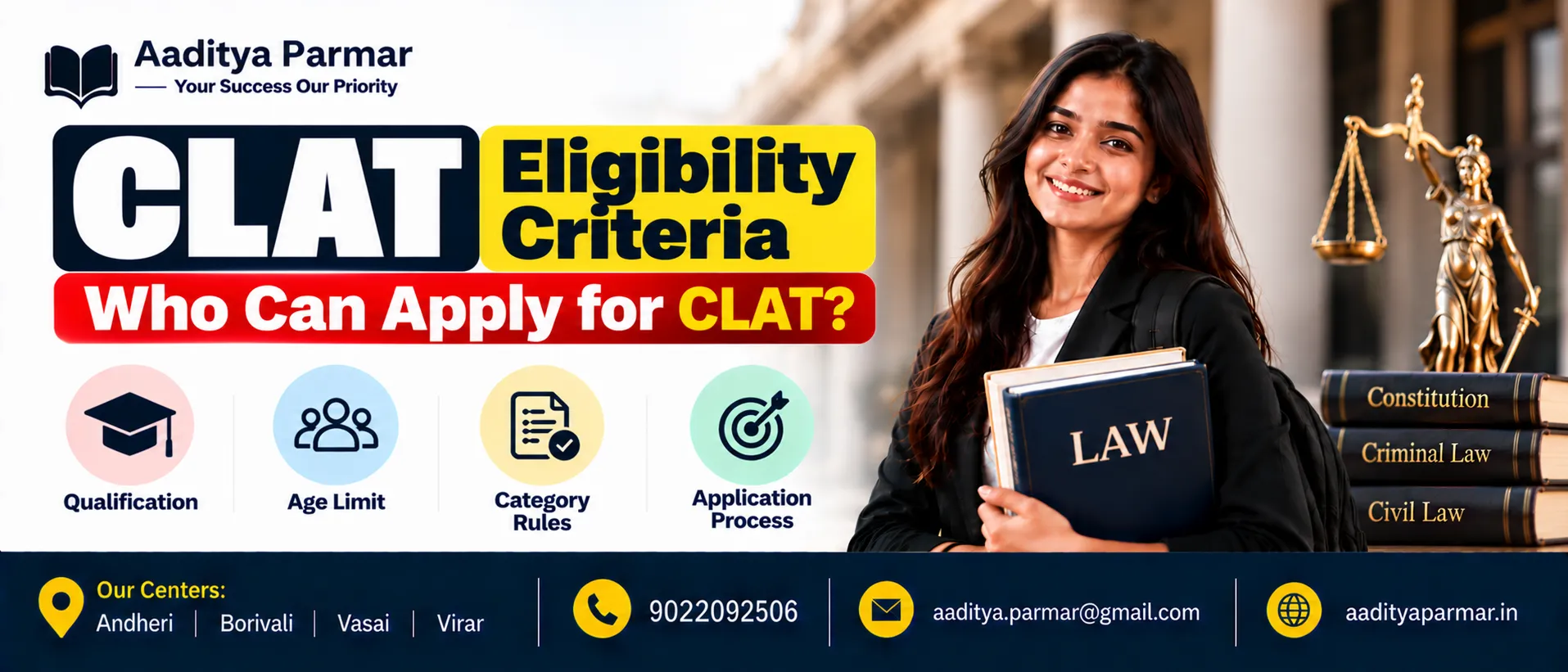
CLAT Eligibility Criteria: Who Can Apply for CLAT? Complete Guide for 2027

Summary: CLAT Eligibility Criteria 2027 The Common Law Admission Test (CLAT) is a national-level entrance examination conducted by the Consortium of National Law Universities. It is used for admission to undergraduate five-year integrated law programmes and postgraduate LL.M. programmes at participating National Law Universities. Some other institutions also use CLAT scores according to their own…

Best Books for MH CET Law 3 Years Preparation: Complete Book List, Study Plan & Strategy

Summary: Best Books for MH CET Law 3 Years Preparation Choosing the right books is an important step in preparing for the Maharashtra Common Entrance Test for the three-year Bachelor of Laws programme, commonly known as MH CET Law 3-Year LLB. However, buying many books does not automatically improve your score. A better strategy is…

RRB Group D: Eligibility, Syllabus & Preparation Strategy — Complete Guide for Beginners

Summary: RRB Group D Eligibility, Syllabus and Preparation Strategy The Railway Recruitment Board (RRB) Group D examination is a recruitment examination for various Level-1 posts in Indian Railways. These posts can include Track Maintainer Grade IV, Pointsman B and different Assistant positions, depending on the notified recruitment categories. For beginners, preparation involves more than studying…

SBI PO Preparation Strategy: A Complete Guide for Beginners (2026–27)

Summary: SBI PO Preparation Strategy for Beginners The State Bank of India Probationary Officer (SBI PO) examination is a competitive recruitment examination for graduates who want to build a career in banking. Candidates preparing for the exam need a structured study plan, a clear understanding of the syllabus, consistent practice and a strategy for both…

MH CET Law 5 Years Exam Pattern & Syllabus Explained: Complete Guide for Aspirants

Summary: MH CET Law 5 Years Exam Pattern and Syllabus The Maharashtra Common Entrance Test for the five-year Bachelor of Laws programme, commonly called MH CET Law 5-Year LLB, is an entrance examination for eligible students seeking admission to participating integrated law programmes in Maharashtra. Unlike the three-year LLB entrance examination, which is intended for…

RBI Grade B Phase 1: Complete Preparation Strategy, Syllabus, Study Plan & Exam Tips

Summary: How to Prepare for RBI Grade B Phase 1 The Reserve Bank of India (RBI) Grade B Officer examination is a competitive recruitment examination for candidates aspiring to work as officers at India’s central bank. Preparing for Phase 1 requires more than studying general banking questions. Candidates must develop a balanced strategy for General…

Post Image
Basic Concept of Data Interpretation for Banking/SSC/Railway

Complete Guide to Data Interpretation (DI) Data Interpretation (DI) tests your ability to extract, analyze, and perform calculations on raw numerical information presented in tables, charts, and diagrams. Regardless of whether the data is presented as a bar chart, pie chart, or line graph, over 80% of DI questions revolve around five mathematical core concepts….